

‘We’re meeting critical gaps in health care’
Clinic offers free health care to teens, hands-on learning for Loyola students
March 26, 2026
Share



On a recent weekday morning, Mercedes Rojas, a third-year undergraduate at the Marcella Niehoff School of Nursing, stood at the front of a high school classroom and held up four tiny red cups one by one. She listed the drinks inside—tea, coffee, Red Bull, and Monster Energy—and asked the teens sitting at desks in front of her to guess the amount of caffeine in each cup.
The high schoolers, only a few years younger than Rojas, were stunned to learn that the popular Monster beverage clocked in at 150 milligrams, 50 milligrams more than the American Academy of Pediatrics’ daily recommended limit for teenagers.
“And they’re having two or three of these a day,” Rojas said.
The aspiring pediatric nurse is one of several Loyola students practicing or interning this semester at the School-Based Health Center (SBHC), a free health clinic for teens at Proviso East High School in Maywood.
Run by Loyola Nursing, the SBHC serves an under-resourced community on the outskirts of Loyola’s Health Sciences Campus, located less than a mile away. It’s also a multidisciplinary learning laboratory for Loyola students like Rojas, who served at the SBHC as part of her community health nursing class.
During her seven-week clinical rotation, she checked vital signs, gave vaccinations, and, through the popular Lunch Bunch program, led the high schoolers in conversation about the health impacts of caffeine.
“We’re getting students involved in learning about their health so they can take this with them after they graduate,” said Rojas, one of the approximately two dozen Bachelor of Science in Nursing students who complete clinical rotations at the SBHC each year. “We want them to be engaged. We don’t want them to feel like they’re in a classroom for another 50-minute class.”
A game-changer for students, parents
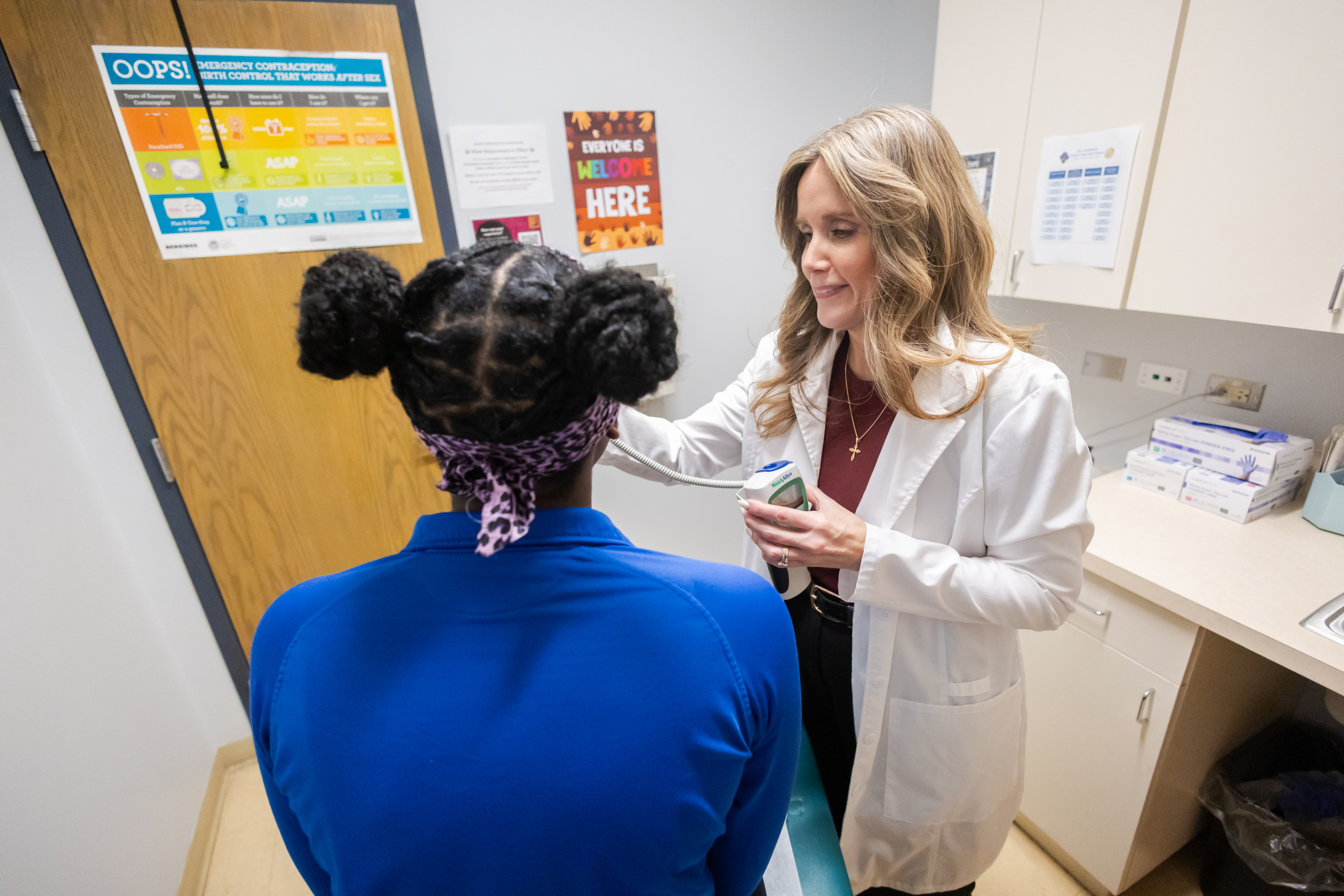
For nearly a quarter century, the SBHC has delivered primary health care at Proviso East, where many students receive free or reduced cost lunches. The clinic offers a full range of services, including immunizations, preventive care, school and sports physicals, lab services, and sexually transmitted infection testing.
Nurse practitioners from Loyola Nursing lead and deliver care. As part of a longstanding academic partnership between the school and Loyola Medicine, the hospital, also located in Maywood, provides a physician who treats patients at the SBHC for several hours each week.
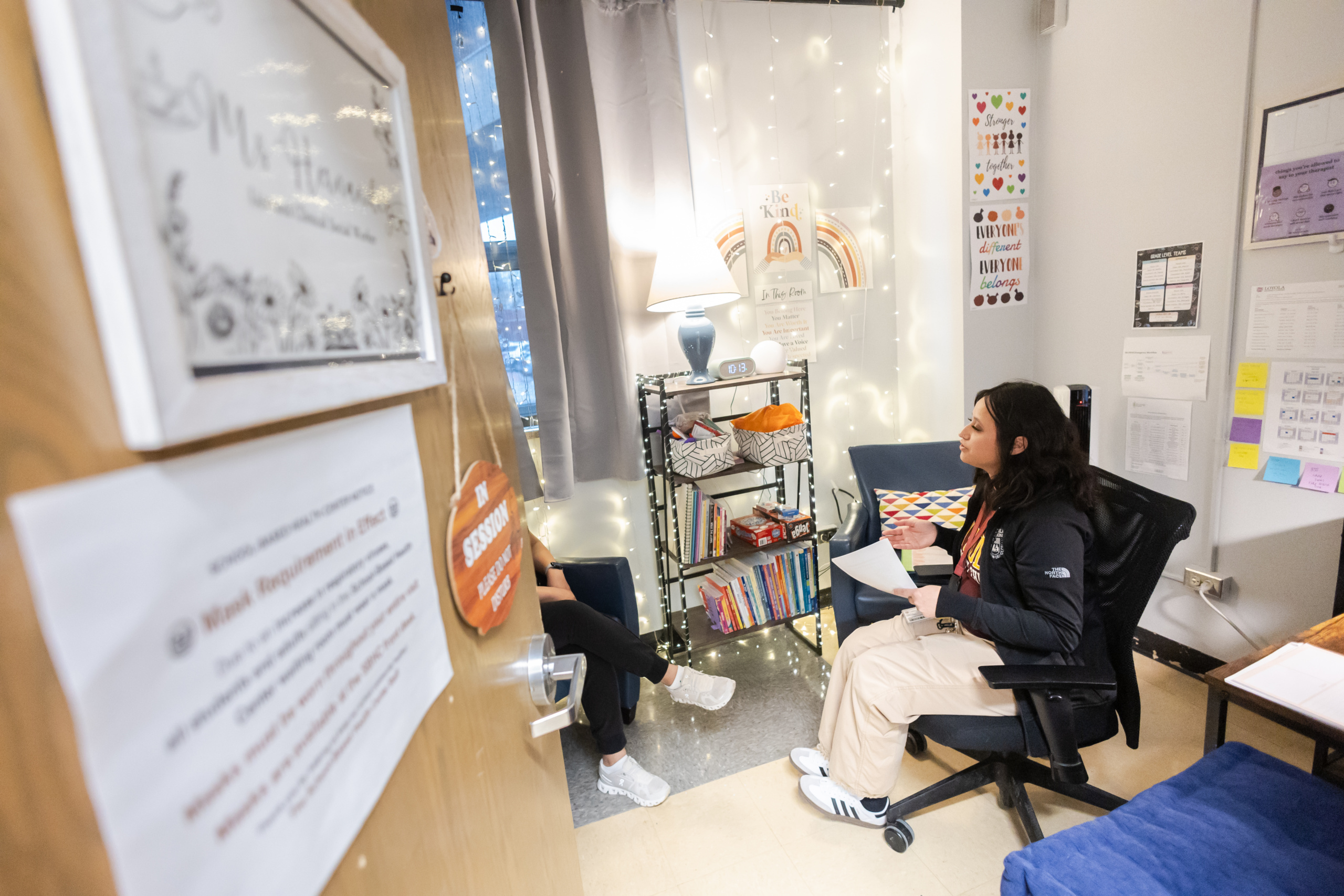
Two licensed clinical social workers provide mental health services to students, many of whom are referred to the SBHC by Proviso East’s counseling staff. A registered dietitian nutritionist from the Parkinson School of Health Sciences and Public Health provides medical nutrition therapy—nutrition counseling for food insecurity, hypertension, prediabetes, and eating disorders—and speaks about healthy eating to classes and sports teams.
The SBHC’s Calm Room provides a quiet lunch space for students who want to escape the hustle of the cafeteria. Students can also pick up nonperishable foods, school supplies, and personal hygiene items from the Pirate Pantry, a supply bank named in honor of the Proviso East mascot.
In a community where many students lack adequate health coverage or transportation, and thus limited access to routine care, the SBHC can be a game-changer.
“We’re meeting critical gaps in health care for these students,” said SBHC Director Susan Buchele, a pediatric nurse practitioner and clinical assistant professor. “Many of them aren’t seeing a provider regularly for preventive care services. We’re also seeing students struggling with chronic illnesses that may never have been diagnosed.”
You can talk in the classroom about what it means to serve communities facing barriers to care, but this is real-life experience. This is boots on the ground.
— Susan Buchele, director, School-Based Health Center
An eye to the future
The SBHC is open during school hours and operates separately from the Proviso East school nurse’s office, which administers medication and manages minor illnesses and injuries. The school nurse often refers students to the SBHC for higher-level care.
Students can visit the SBHC for health care with a parent or, with parental permission, on their own. Buechele said operating the clinic within the high school means less time away from the classroom for students, and less time away from work for busy parents.
Educational programs at the SBHC offer additional support.
The goal, Buechele said, is to care for students’ immediate health needs while equipping them with the skills to live healthy lives now and as adults.
“Because they’re only in high school for four years, we’re not a permanent solution, so we try to get them plugged into health care systems outside the SBHC,” she said. “We’re trying to transition them to adult care.”
The SBHC is funded entirely through philanthropy and grants. Last month, Loyola received a three-year, $1.7 million grant from the Westlake Health Foundation, a longtime donor, to support the SBHC. Of that, Parkinson received $322,000 for its Nutrition Revolution program, which runs a variety of nutrition education efforts school-wide.
A tool for empowerment
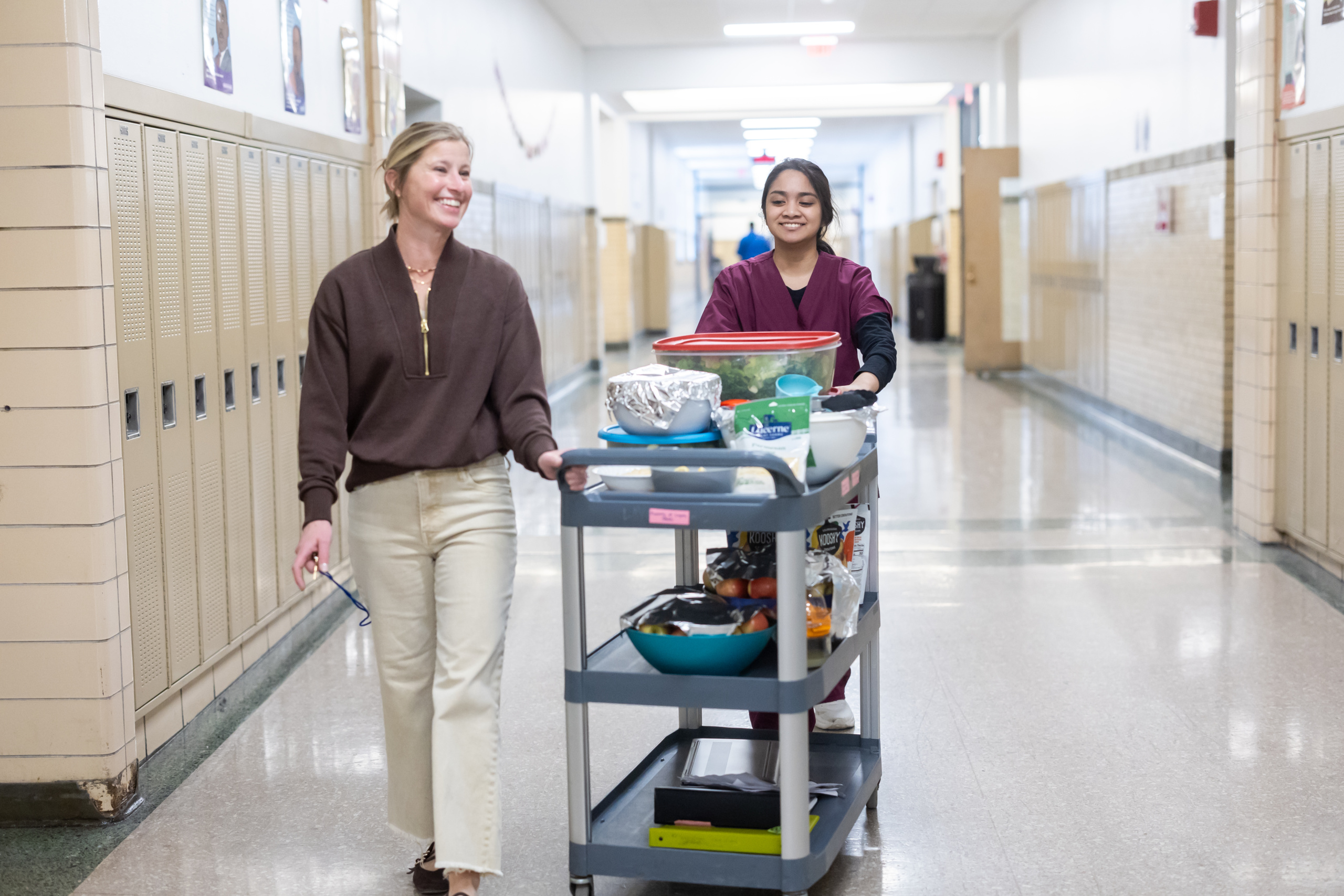
The Lunch Bunch, part of Nutrition Revolution, is the centerpiece of Parkinson’s outreach at Proviso East. Twice a week, Parkinson dietetics interns and Loyola Nursing students, under the guidance of a Parkinson dietitian, cook healthy but inexpensive meals for up to 54 students.
In the SBHC’s tiny kitchen, there is no stove or oven. Meals are prepared using small appliances like a microwave and pressure cooker; recent offerings have included chicken tinga tostadas, Cuban rice bowls with black bean mango salsa, and southwest chicken salad.
Menus are designed to reflect the school’s cultural diversity and show students that food can be both healthy and tasty, said Arden Baldinger, the registered dietitian nutritionist.
“We’re trying to raise their awareness of how nutrition plays a role in physical and mental health,” she said. “We talk about how nutrition can help them focus in school, or how poor nutrition can make mental health conditions like depression worse. We’re showing them how nutrition impacts so many aspects of quality of life.”
Assistant Professor Kevin Pietro, director of Parkinson’s Dietetics Education Programs, said the Lunch Bunch provides evidence-based information to teens as they’re beginning to shape lifelong eating habits.
“These experiences build confidence and communication skills in ways that simply cannot be replicated in a traditional classroom,” he added. “At the same time, Loyola students see firsthand how powerful food can be as a tool for connection, learning, and empowerment.”
A focus on community health
For Loyola students, the SBHC is a real-life incubator where they can work alongside health care professionals from multiple disciplines, just as they will in the workforce.
Students from Loyola’s Stritch School of Medicine and the School of Social Work serve at the SBHC with Loyola Nursing and Parkinson students.
The SBHC also offers the chance for Loyola students across disciplines to gain experience in community-based health care, a growing field that brings care directly to underresourced communities in non-traditional settings like homes, schools, and neighborhood clinics.
Buechele said caring for patients in a school instead of a hospital gives Loyola students deeper insight into the challenges Proviso East students and their families encounter.
“You can talk in the classroom about what it means to serve communities facing barriers to care, but this is real-life experience. This is boots on the ground,” she said. “Our students are getting a really good view of the community because they’re interacting with the Proviso East students. They’re getting a holistic view of the students and families we serve.”
Making a difference
That’s true for Rojas, who said the SBHC has opened her eyes to the health struggles faced by many Proviso East students that are linked to poverty and other social and environmental factors.
“High school is a time when there are so many new things in their lives and they’re preparing to be adults,” she said. “It’s hard to become an adult when you’re struggling with your health—maybe you’re getting out of high school and you have high blood pressure, or you have no idea how to be healthy on a low budget.”
After graduation, Rojas hopes to work in a community-based clinic, where she believes she can make the biggest difference as a nurse.
“Community outreach is the number one gap we have in our health care system,” she said. “I’ve learned that, as nurses, it’s our responsibility to get to know our patients and understand the communities we’re in.”
Read more stories from the Marcella Niehoff School of Nursing.
Header image: Mercedes Rojas, an undergraduate at the Marcella Niehoff School of Nursing, said practicing at the School-Based Health Center reinforced her decision to pursue pediatric nursing after graduation. (Photo: Lukas Keapproth)