
Inside an alum’s trailblazing model of public school enrichment in the Bay Area
June 26, 2026
Share



Inside the fabrication lab at Cabrillo Middle School in the Santa Clara Unified School District in California, you won’t find students sitting at desks. Instead, you’ll see eighth-grade participants chatting excitedly, running software modeling programs, and operating laser cutters, bandsaws, and 3D printers. It’s loud, a bit raucous, and highly productive.
Students in the program, known as the 49ers STEM Leadership Institute, aren’t graded on tests and quizzes. They’re evaluated on progress toward benchmarks and guided by core values, more like employees at a tech company or design firm. They design and build toys, code Lego robots to perform tasks, prepare marketing plans, and engage in design competitions. Many find it a breath of fresh air.
“You don’t get this in any other schools that I’ve been to,” says Connie Chen, an eighth-grade student in the program. “I was like, why not? It seemed really fun. I saw a laser cutter, and I really like lasers.”
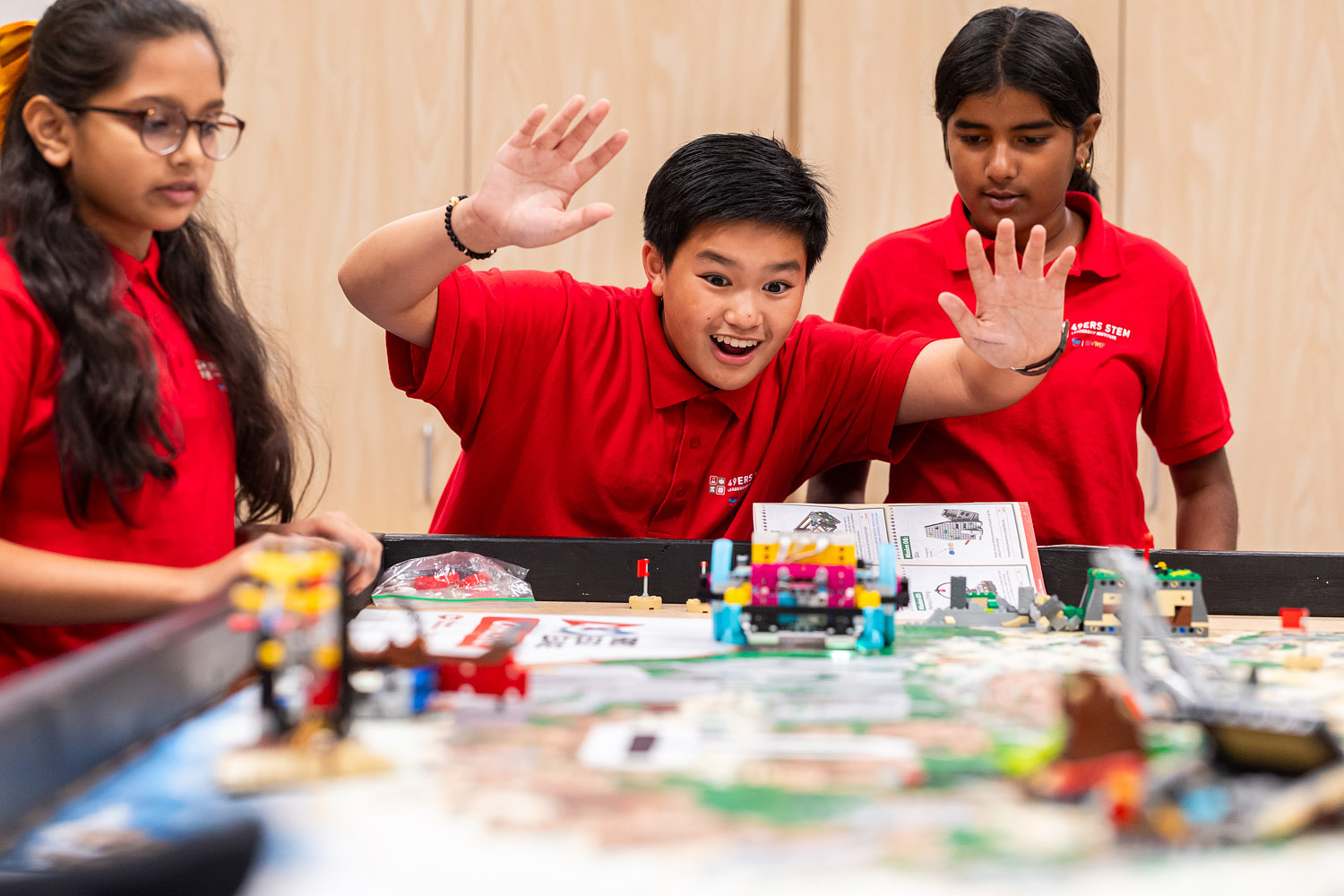
This past September, Chen stood before a mat-covered table, where a Lego robot on wheels maneuvered through a series of obstacles. Her partner, Kendall Keegan, who helped program it using block-coding software, operated it remotely with a tablet.
The two were preparing for the FIRST Lego League Challenge, a global competition for students ages 9-16 that tests their critical thinking, coding, and design skills. As they made minor coding adjustments, Keegan told me she learned about 49ers SLI from her older brother, a program graduate who went on to study quantum physics at Berkeley.
“I know that it helped him out a lot,” Keegan said. “If he just went through a traditional school program, he probably wouldn’t have found his interest as easily.”
Keegan’s brother is not alone. The educational cohort model for seventh- to 12th-grade students has served more than 700 students, with 88 percent of graduates pursuing STEM (science, engineering, technology, and math) majors, at least three graduates launching their own start-ups, and many attending top universities.
Alleviating apathy and empowering passion
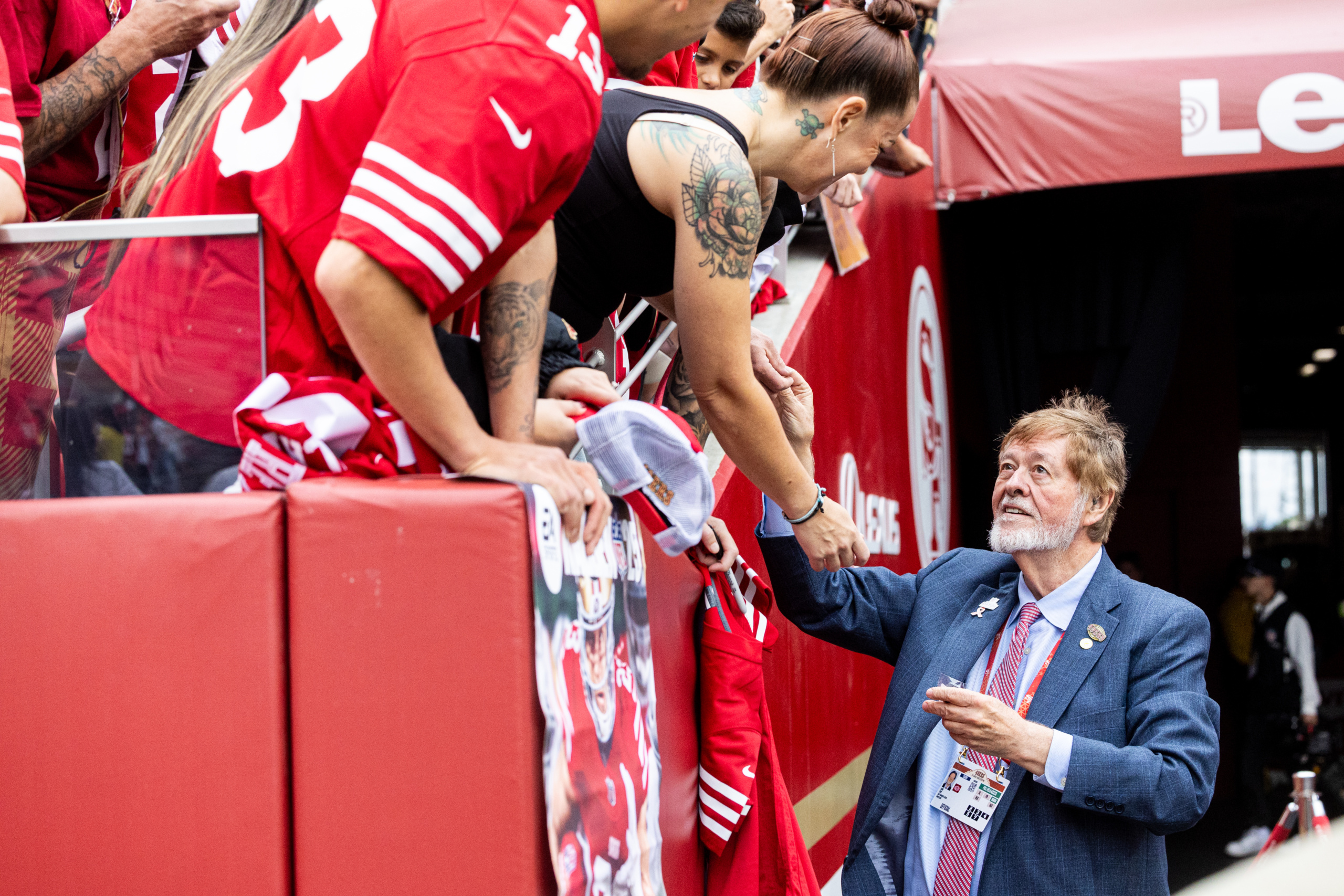
The 49ers SLI is the brainchild of John York (MD ’75), a Stritch School of Medicine alum who cochairs the San Francisco 49ers (his family owns a controlling stake in the franchise) and heads the board of its philanthropic arm, the 49ers Foundation. Focused on design thinking and hands-on, project-based learning, the program aims to prepare students from disinvested communities for college success and empower them to pursue their passions. At the same time, it confronts an increasingly pressing issue for educators: school boredom, particularly for high-achieving students.
“Whatever Dr. York envisioned, education is still catching up. Schools are trying to do makerspaces, trying to bring in expanded learning programs,” said Sarah Rahman, the program director for the Silicon Valley Educational Foundation, a funding recipient of the 49ers Foundation that administers the program. “There’s a lot of conversation in the educational ecosystem around how to bring all those components into the frame because we’re dealing with kids that have apathy and aren’t interested in school anymore.”
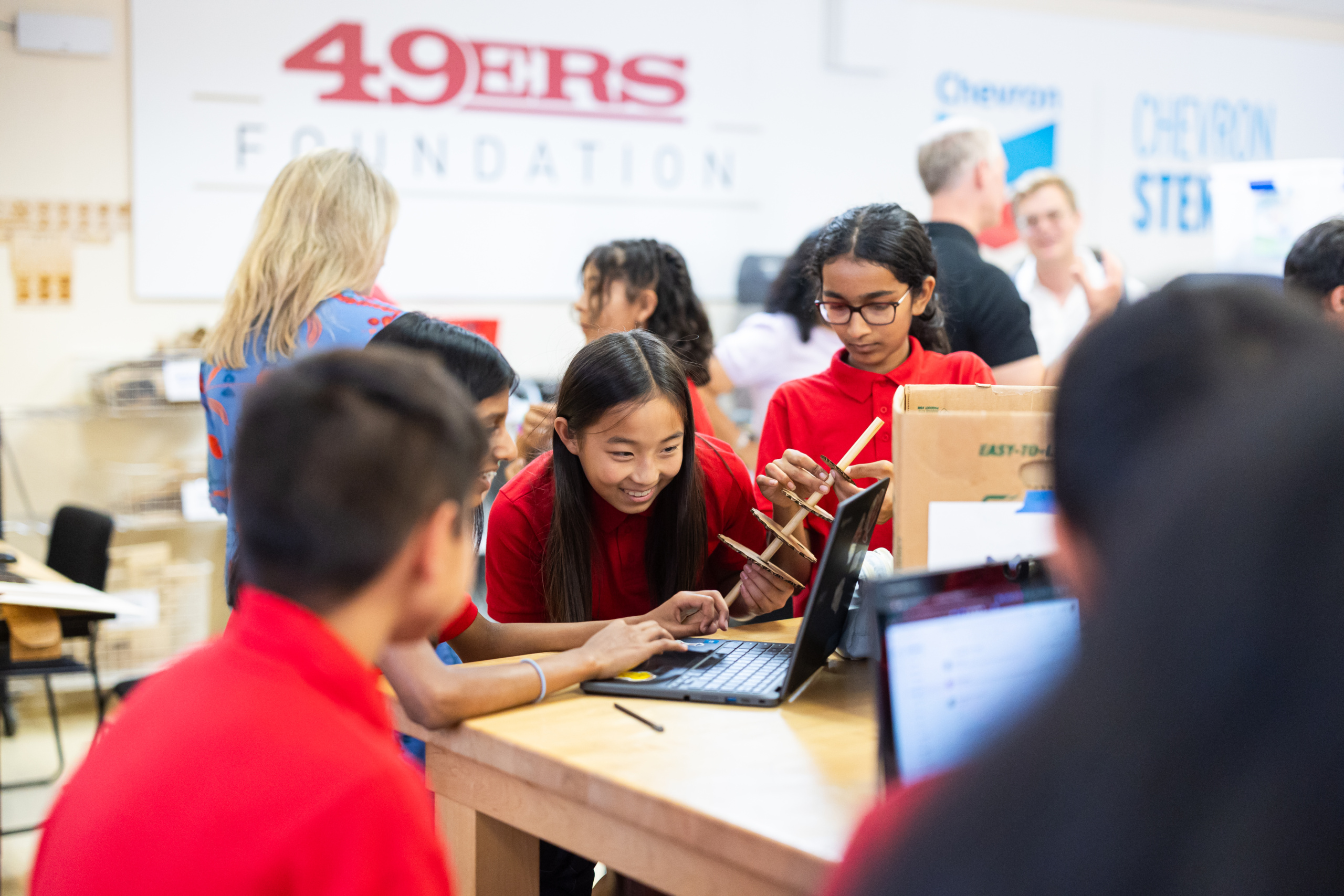
Admission into the program is highly competitive. Each year, 49ers SLI accepts 60 sixth-grade students out of a pool of 200. They are required to write application essays and complete a paired interview, in which they work with a peer to complete an unprompted design thinking exercise, such as building a tower without using their hands.
“The teachers interview students to get at their behavioral characteristics. Are you able to complete a program like this? Do you have that grit factor?” Rahman says. “And then also, are you okay with failure? Because the design thinking process champions failure. Are you going to be okay with an ambiguous school program, where, maybe, you’re not going to get a grade, you’re just going to keep working and figuring things out.”
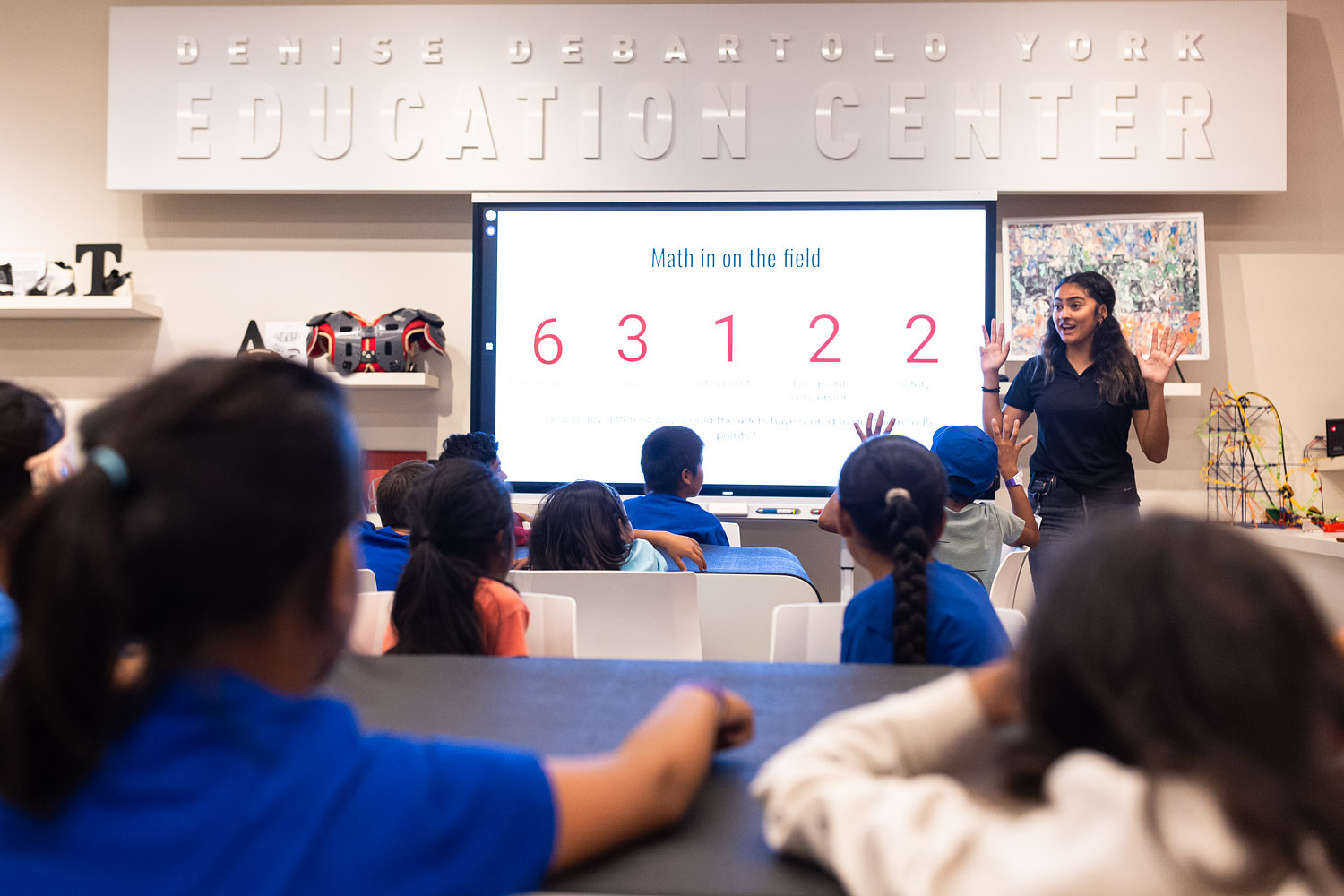
Students participate in 49ers SLI enrichment programs after school, on weekends, and three weeks each summer—adding 360 hours to their school experience. In addition to project-based work in the lab, they take SLI-specific math and science classes that level up to AP Seminar and AP Research courses they take as juniors and seniors at Santa Clara High School.
“Last year, when I was teaching a geometry class, they would make amazing connections,” says Glenn Lillie, a math teacher and 49ers SLI instructor at Cabrillo Middle School. “They all ask really thoughtful questions because they want to absorb it all,” Lillie said. “And they always want to know more.”
Whatever Dr. York envisioned, education is still catching up. Schools are trying to do makerspaces, trying to bring in expanded learning programs. There's a lot of conversation in the educational ecosystem around how to bring all those components into the frame.
— Sarah Rahman, program director for Silicon Valley Educational Foundation
From Stritch to Santa Clara
The 49ers SLI, while exceptional in its outcomes, is just one of many Bay Area youth development programs York has had a direct hand in shaping. He and his wife, Denise DeBartolo York, serve as cochairs of the board of the 49ers Foundation, which invests more than $10 million a year in historically underresourced communities. In addition to sponsoring STEM learning in four classrooms inside Levi’s® Stadium, the foundation has raised funds to support Fresh Lifelines for Youth, a mentorship program for young, nonviolent offenders, as well as writer Dave Eggers’ 826 Valencia and AmeriCorps’ City Year.
But 49ers SLI is among the projects closest to York’s heart — and most closely connected to the Jesuit values he cultivated at Stritch, where he earned his medical degree and completed a two-year residency in blood pathology.
At Stritch, York found a mentor and close friend in the late Ralph Leischner (MD ’68), then an attending physician at Loyola University Medical Center. Leischner, who went on to chair Stritch’s pathology department and became senior associate dean, has been credited with revolutionizing the school’s medical curriculum by shifting its emphasis from large lectures to a problem-based, small-group format.
Intentionally or not, a similar pedagogical approach anchors SLI. Learning is problem-based and collaborative. In lessons and projects, teachers stress nine values—collaborative spirit, risk-taking, passion, communication, creativity, curiosity, determination, leadership, and initiative—that place character formation at the center of the learning process.
“We didn’t tell the teachers what to teach,” York said, recalling the program’s launch. “But we gave them nine principles students should learn through an education … I never thought that the teachers would take those nine core principles so seriously.”
Yet, in conversations with program staff, it is clear that they do. “When we first meet these kids in their interviews, they all focus on, ‘I’m a leader,’” Lillie said. But by the end of the program, “nobody says ‘leader’ anymore. They say, ‘I’m creative, I take risks.’ All these traits make great leaders, but students don’t think of themselves that way. They think of themselves as a whole person.”
And if the Jesuit value of cura personalis, or care for the whole person, is reflected in the program’s focus on character formation, Jesuit values also permeate SLI’s broader social mission to improve educational access for low-income students in Title 1 schools.
“You drive around here, you see Google and Nvidia, all the biggest tech companies. You think the roads are paved with gold,” said Justin Prettyman, the vice-president of philanthropy for the 49ers Foundation. “But there’s great disparity in these communities. In high-need school districts across the Bay Area, schools can have 85% of students on free or reduced lunch.
Stan Garber, a former principal at Cabrillo Middle School who now works as a docent at the 49ers Museum inside Levi’s® Stadium, understands this well. He was on hand when York presented a $2 million check to the school to launch SLI.
“We were a poor school, and they didn’t want to invest in a school that was already full of wealth. So they picked mine, and I rode that wave,” Garber said. “It was all about empowering underrepresented students. So it was for Hispanic students and African American students, and then for girls and for kids who wouldn’t have ordinarily been able to get that extra support.”
“You had to be a good student, and you had to be committed,” he continued. “And then you went on to become an engineer, to become a mathematician. You became something special.”
More than a decade after the program started, Garber, still receives emails from former SLI students who have gone to be academic standouts, including 24-year-old Letitia Aloysisus, who, in January, earned her doctorate in occupational therapy from Baylor University. Having completed her clinical rotations at Cincinnati Children’s Hospital Medical Center, she plans to provide supportive therapy for patients with congenital heart disease.
“She got into this program, and it was like she just blossomed,” Garber said. “So this happened to a select group of kids, and the program has shown proven results later in life. John York gave them the opportunity, because that’s what he believed in.”


