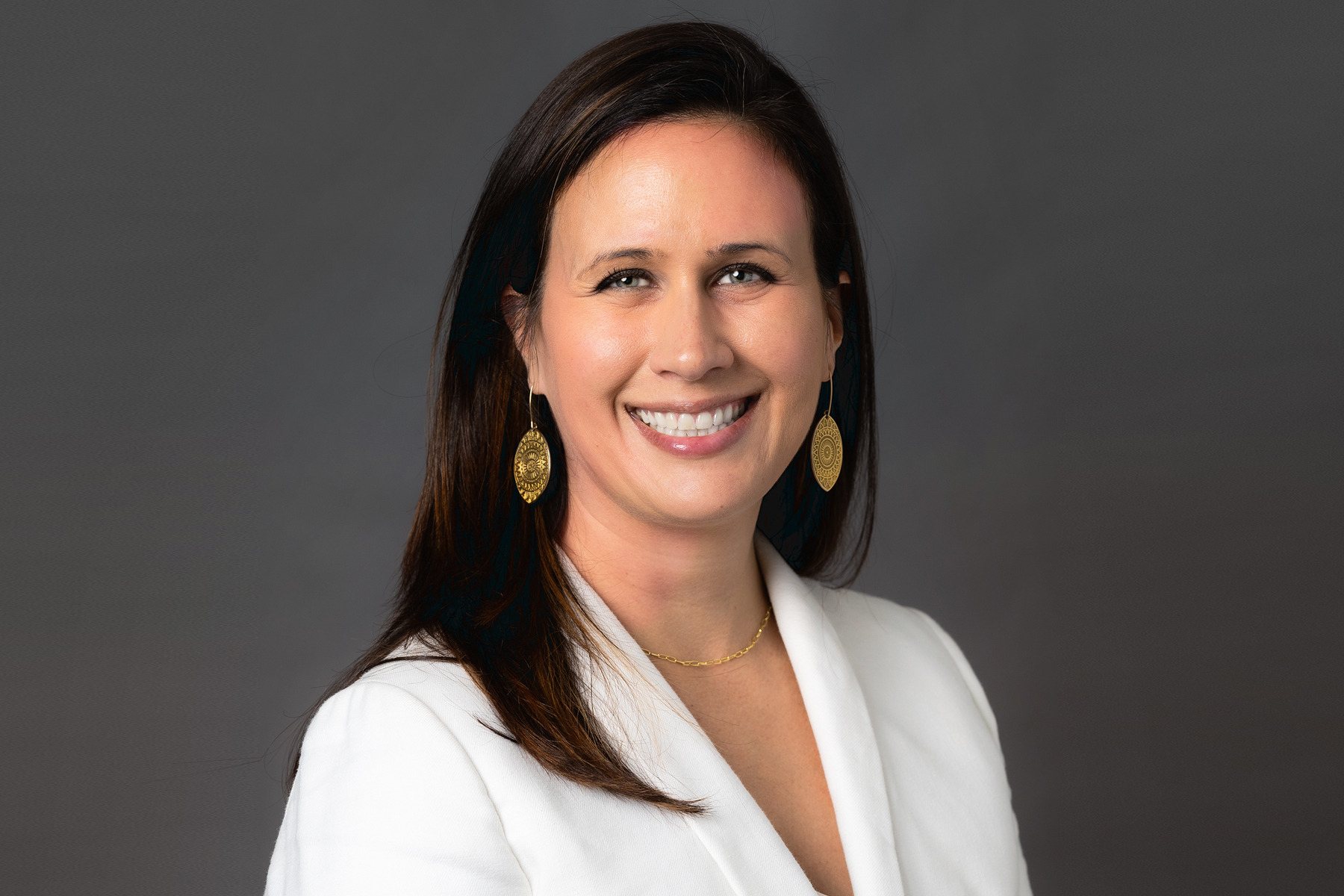


Get to know Keith Champagne, vice president of student development
September 8, 2026
Share



Ask Keith Champagne a question about Loyola University Chicago, from residence life to student organizations to a new student program, and the conversation will find its way back to Jesuit values. As Loyola’s vice president of student development, Jesuit education and the values that come with it are not just a talking point; they’re the foundation that formed him as an individual and now as a leader. A proud first-generation graduate of Loyola University New Orleans, Champagne credits his own experience attending a Jesuit university and engagement with Jesuit faculty and leaders in his approach to student development and personal Ignatian formation.
He came to Loyola in 2021 to lead the Division of Student Development (DSD), following administrative roles at Central Washington University and most recently as the vice chancellor of Athletics, Enrollment Management, and Student Affairs at the University of Alaska Fairbanks.
Following the start of another academic year, Champagne discusses the role of Jesuit values in student formation and Loyola’s efforts to creating a welcoming campus.
What attracted you to Loyola?
I think it was a calling, a special premonition. During the pandemic in those cold days in Alaska, I found myself in Barnes and Noble. I saw all these Jesuit books, and I got this book on the Spiritual Exercises because I was looking for purpose and meaning, especially at that time. I started reading and I said to myself, “I don’t think I need to read this. Let me try to the best of my ability to practice this.”
About a month later, I get a call from a search firm saying I’d been nominated for the role of vice president for student development at Loyola and asking if I was interested. At that time in my life, during that time in Loyola’s history, it felt like it was coming home. It’s been one of the best decisions of my life and the best five years of my professional career to be here at Loyola.
What does it mean for students to feel like they belong at Loyola?
Belonging for me starts with self-efficacy, self-esteem, and self-confidence. But belonging is also a partnership for me. [Students] come in here saying, “I belong here,” and I have a responsibility to affirm that by making sure our communications, programs, activities, and events show them, explicitly and implicitly, that they do, in fact, belong here.
Regardless of their religion, orientation, gender, ethnicity, race, culture, socioeconomic level, Loyola is the destination for you. As a university, we have to communicate that on a consistent basis, and demonstrate that through our leadership and our deeds.
How do you see Jesuit values showing up in the everyday work of student development?
We talk a lot in Jesuit institutions about cura personalis, and for me, that shows up by how we interact with our students: how we approach them, say hello, worship with them, message them, communicate with them, and hold them accountable for doing things a certain way. I don’t always use the words “cura personalis” when I’m interacting with students, but I try to act in that manner, letting them see this is about formation, mission, and ministry.
Describe a DSD program that you’re most proud of working on. What inspired this program?
When I first met with [former Loyola president] Dr. JoAnn Rooney during the interview process, I shared with her that I was a boots-on-the-ground vice president: I would be among the students, and I would walk with them to assess and evaluate where students are. I started out by meeting with students and building bridges and partnerships both on and off campus, because I’ve always believed that you don’t build a bridge during a hurricane.
One example of this was prior, during, and after the events of October 7, 2023. We began to reach out with our Muslim and Jewish students, as well as students from different backgrounds, to listen and engage in dialogue. We also started going out into the community to work with interfaith leaders to say, “How do we come together? How do we talk about these issues, and how do we care for our students?” One thing created from this was the Student Response Team, which responds to local, regional, national, and global issues that may impact our students.
I’m also proud of the Anti-Hate Initiative that we’re launching, which will reinforce Loyola’s anti-hate education, response, coalition, and assessment. For me, this work is directly inspired by the work of John and William Markoe, S.J., Father Louis Twomey, S.J., as well as “On the Interracial Apostolate” by Pedro Arrupe, S.J., where he discussed what Jesuit institutions needed to do for Black students during the Civil Rights Movement.
If Loyola is to prepare students to care for self, care for others, care for community, and to go forth and set the world on fire, they have to be able to interact with the world with people they disagree with.
In what ways does the work of the Division of Student Development care for, support students in their learning, and prepare for life after graduation?
There’s no secret recipe or panacea. It’s being in companionship and accompaniment with students: talking to them, getting to know them, finding out what’s troubling them and what they’re trying to learn. I like to tell people that we are the division that doesn’t close. Students are with us 24 hours, seven days a week—they eat, live, worship, and grow with us.
When you interact with students, you have to do it in a positive, loving, engaging manner, because if you don’t, they assume you don’t care. Students have to be able to see you, know you, and interact with you.
There’s no secret recipe and no panacea. It’s being in companionship and accompaniment with students...
— Keith Champagne, vice president of student development
What’s the hardest part about being a college student right now, in your view?
I think what’s hard for students right now is to be in college in what’s called a VUCA environment: volatile, uncertain, complex, and ambiguous. [It’s hard] to be a college student in a world that’s politically divided. People are often rushing to judgement without getting to know their fellow students or meeting people where they are. But that’s what I love about Loyola: our mission, Jesuit ideals, and Ignatian ways of knowing and doing give us a body of work to assist our students along their educational journey and prepare them to make a difference in today’s world.
What do your priorities look like in this academic year?
One of my priorities is continuing to develop the Rambler Brotherhood Project and form LUCES (Loyola University Chicago Empowering Sisterhood). Both are Jesuit-based student success initiatives undergirded by Ignatian values, where we work with students to try to help them understand how this Jesuit, Catholic education can help them to make a difference in the world.
Another priority for me is developing meaningful partnerships with other divisions and leaders across the University. Everything we do at the University impacts the student experience, and we want our students to have a deeply purposeful and meaningful time at Loyola.
While there are many different areas of the university that support the student experience,the student perceives it as one integrated Loyola.
We’ve been having a series of breakfast meetings with different vice presidents in their divisions to promote cooperation, collaboration, and synergy.
What do you enjoy doing in your free time?
I like to read, and I read a lot. I enjoy theater and going to plays, as well as seeing jazz and live music. I’m also from New Orleans, so any chance I get to go down there to spend time with my family, I do that. My favorite New Orleans foods are gumbo, red beans and rice, shrimp étouffée, and bread pudding—anything from New Orleans.
Explore campus resources, activities, and ways to get involved on campus on the Division of Student Development website.