
Ramblers envision Martin Luther King Jr.’s beloved community through service
February 3, 2026
Share



Even as Chicago braced for record-breaking cold fronts, the Loyola community braved the winter weather to come together in service of others for MLK Day of Service.
The annual tradition invites Loyola faculty, students, and staff to participate in service in recognition of Martin Luther King Jr.’s legacy and the Jesuit ideal of being people for and with others. What began as a single day of service has grown into a yearly series of volunteer events across Chicagoland throughout the month of January.
“Dr. King’s vision of a beloved community and Loyola’s Jesuit values both call upon us to serve and support those at the margins of society,” shared Cory Barnes, co-director of the Center for Student Inclusion and Belonging, who led the organizing committee for MLK Day of Service. “We’re grateful for our partnerships with local organizations that helped create these opportunities to live out the values of Dr. King and our own Jesuit mission.”
This year, more than 80 people participated in service opportunities at sites on or near Loyola’s three campuses, including Misericordia, Chicago Lights, and Labre Homeless Outreach.
My hope is that the volunteers participating in this day of service can have a greater awareness of these challenges and feel compelled to serve beyond this one moment in time.”
— Theresa Ngyuen, professor of Emergency Medicine and medical co-director of Loyola Street Medicine
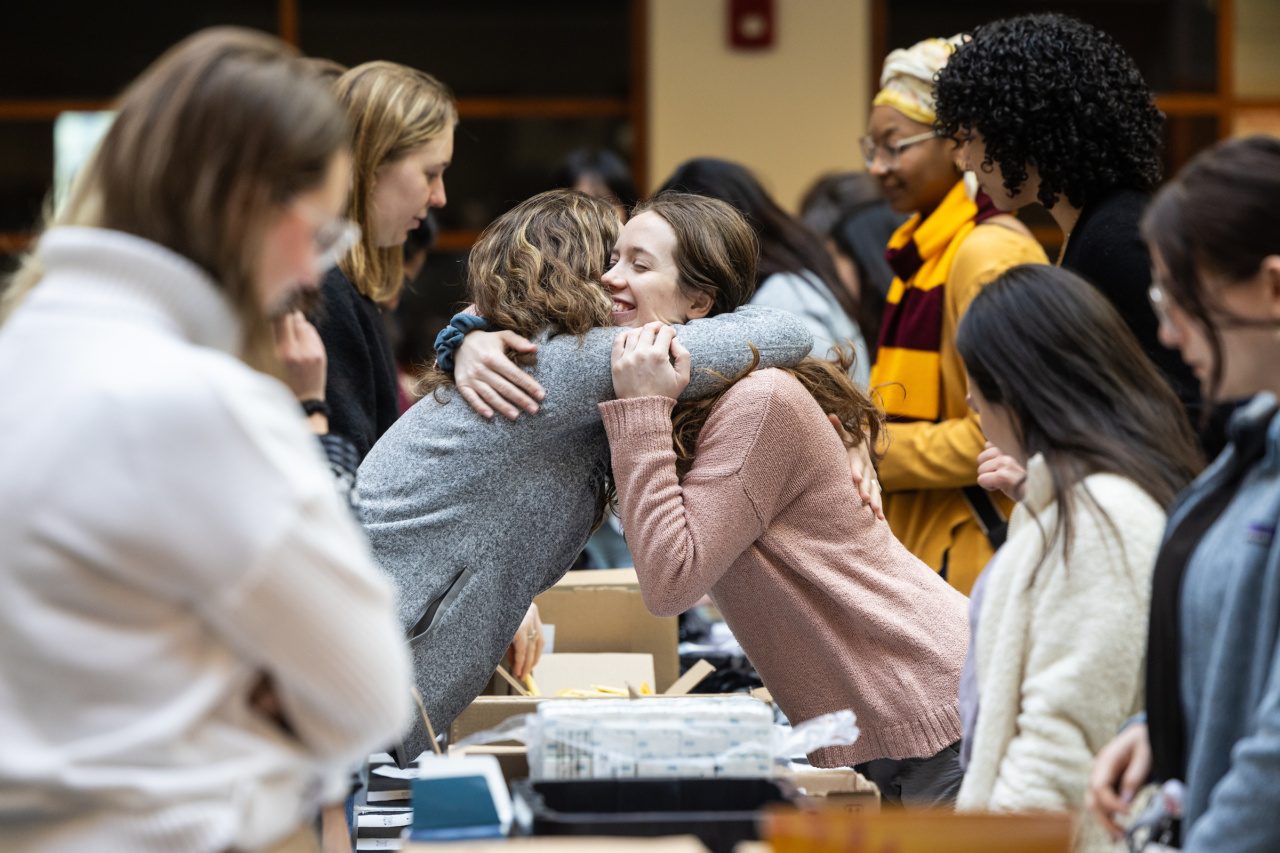
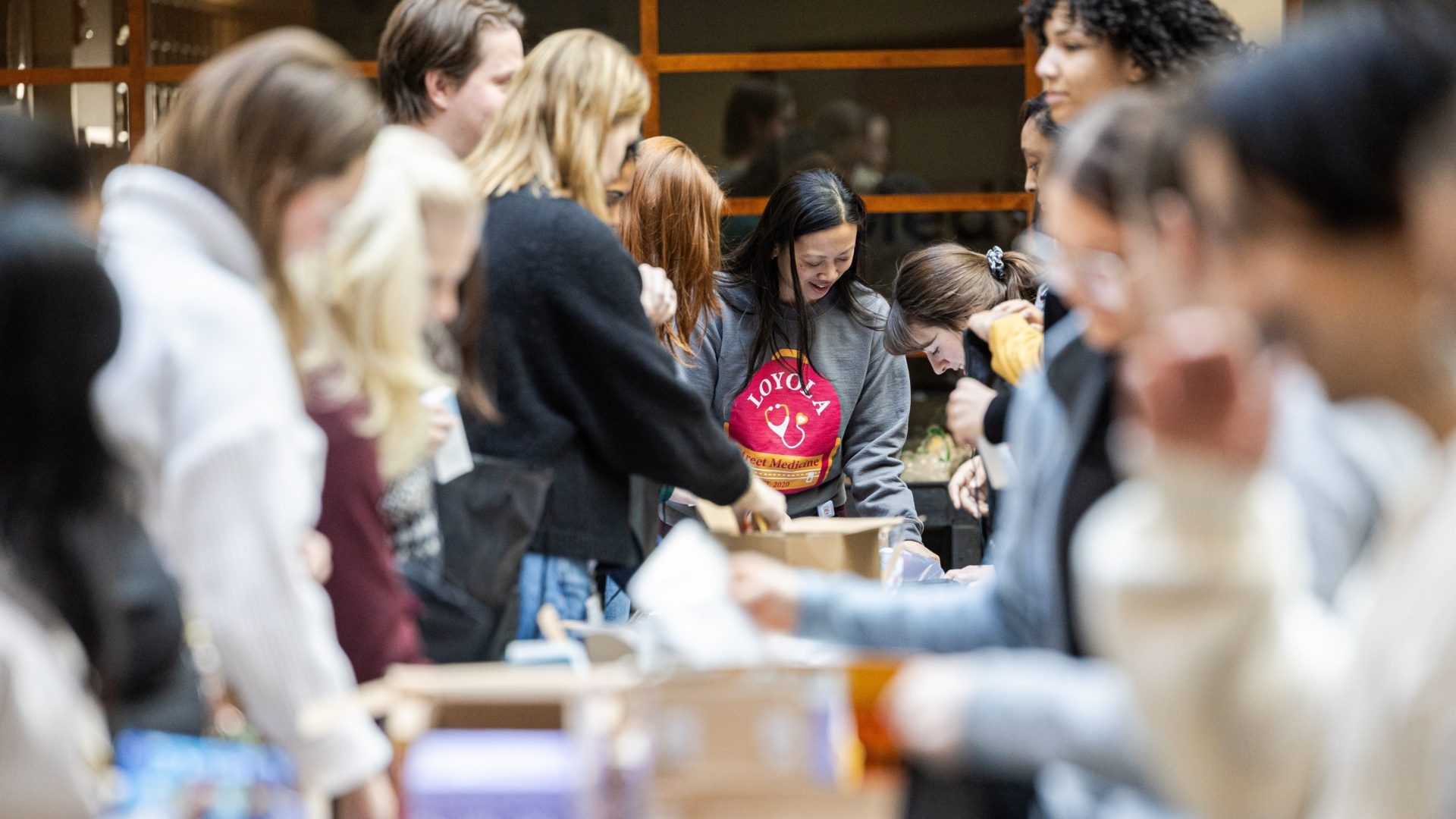
On the Health Sciences Campus in Maywood, volunteers gathered in the Cuneo Atrium to assemble hygiene kits for the Loyola Street Medicine program, through which medical students and faculty members in the Stritch School of Medicine provide medical care and social outreach to individuals experiencing homelessness. Volunteers packed the kits with essentials like first-aid, soap, shampoo, and toothbrushes, along with warm clothes and snacks.
“These hygiene kits allow our teams to meet immediate, basic needs while delivering patient-centered care both in the community and in the hospital,” said Theresa Ngyuen, Medical Co-Director of the Loyola Street Medicine program and Professor of Emergency Medicine at Stritch.
Theresa Ngyuen, professor of Emergency Medicine and medical co-director of Loyola Street Medicine, shared that the program itself is rooted in one of Dr. King’s teachings: “A threat to injustice anywhere is a threat to justice everywhere.”
“Homelessness in itself is an injustice, rooted in complex social, health, and mental health challenges,” said Ngyuen. “My hope is that the volunteers participating in this day of service can have a greater awareness of these challenges and feel compelled to serve beyond this one moment in time.”
A few blocks from Water Tower Campus, Chicago Lights welcomed Loyola students and staff to volunteer in its Social Service Center, nestled within Fourth Presbyterian Church. The center provides essential resources for disadvantaged and unhoused individuals, including groceries, clothing, medical care, and assistance with housing and other social services. Volunteers processed incoming donations, pushed carts and bagged groceries in the food pantry, and helped people find clothes in their size from the share shop.
Maria Olivares, a freshman in the Marcella Niehoff School of Nursing, worked in the share shop, helping guests shop for clothes in their size. Her motivation to volunteer and study nursing is the same: to serve others through hands-on work and one-on-one connection.
“I think it’s more important, and even more rare, than ever to have empathy for others in this day and age,” shared Olivares. “Spending just a few hours with the people coming through and seeing how satisfied they looked at the end, to have been treated with compassion and have their most basic needs met was satisfying.”
Robin Schultz has worked in the purchasing department at Loyola since 2002 and jumped at the opportunity to volunteer with Chicago Lights, citing her love for meeting and talking with people from all walks of life.
“Sometimes what people need more than anything is human connection,” said Schultz.
Barnes reflected on this years’ service by remarking, “We hope to continue to see participation grow each year to make an even greater impact–and to encourage our community to envision a better world and engage in service all year round.”