


With new therapy, Loyola researchers are working to cure a deadly brain cancer
October 30, 2026
Share


Nearly a decade ago, cancer researchers were brimming with hope about the potential of an emerging immunotherapy drug for treating many forms of cancer. The drug attempted to block the activity of indoleamine 2,3-dioxygenase 1 (IDO1), a naturally occurring enzyme that cancer cells hijack to suppress the body’s immune response to a tumor.
After early trials showed promise, pharmaceutical companies like Merck & Co. and Incyte poured hundreds of millions of dollars into late-stage clinical trials—studies often involving 600 to 800 patients—to test whether IDO1 enzyme inhibitors could increase patient survival.
To the dismay of many, the trials universally failed to show improved outcomes in cancer patients. But Derek Wainwright (MS ’04, PhD ’09) and his research colleagues, who had predicted the failure of those trials, recognized several blind spots in their methodologies. Crucially, the trials failed to account for the priming phase of the body’s immune response—a two-week process in which cancer-fighting T cells activate, become specific, and accumulate in the lymph nodes before traveling to the brain, where they trigger IDO1 expression.
“It was a billion-dollar failure, and we predicted it, for which we were not very popular,” said Wainwright, an associate professor in the departments of Cancer Biology and Neurological Surgery at the Stritch School of Medicine and the program leader of Cancer Biology and Therapeutics for the Cardinal Bernardin Cancer Center. “But because we predicted it, we started creating a new type of drug targeting IDO1 that goes beyond its enzyme function.”
That drug is a potent IDO1 PROTAC (proteolysis-targeting chimera). It targets IDO1, but not in the same way as IDO1 enzyme inhibitors. Instead, the synthetic compound recruits the cell’s waste-disposal machinery to degrade the IDO1 protein, effectively chopping it into amino acids the cell can integrate into other proteins.
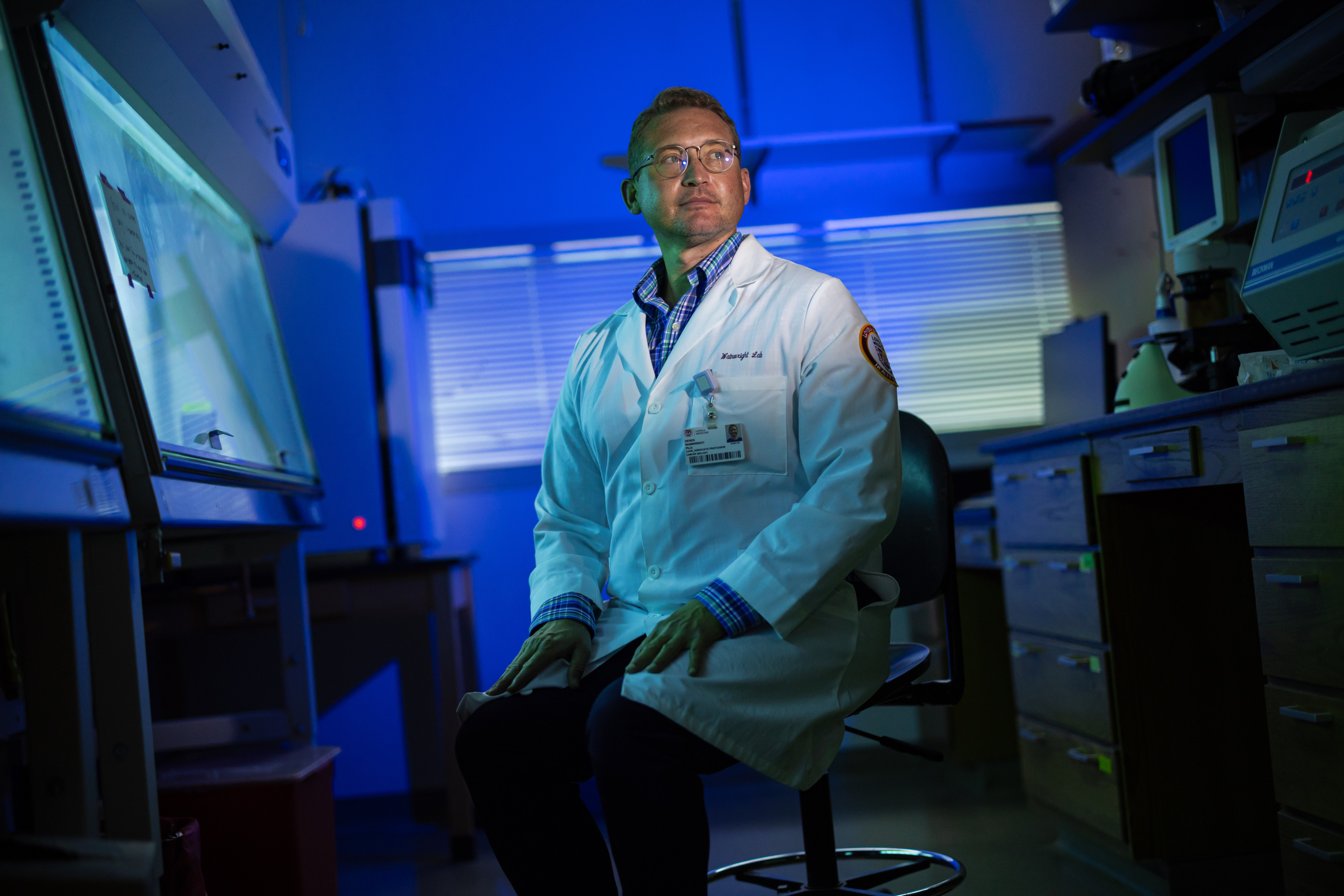
If the new drug is successfully introduced in clinical settings, Wainwright believes it could improve survival outcomes for patients with glioblastoma, a rare and notoriously aggressive brain cancer that is diagnosed in roughly 150,000-250,000 people worldwide each year and has famously claimed the lives of the late U.S. Senators John McCain and Ted Kennedy.
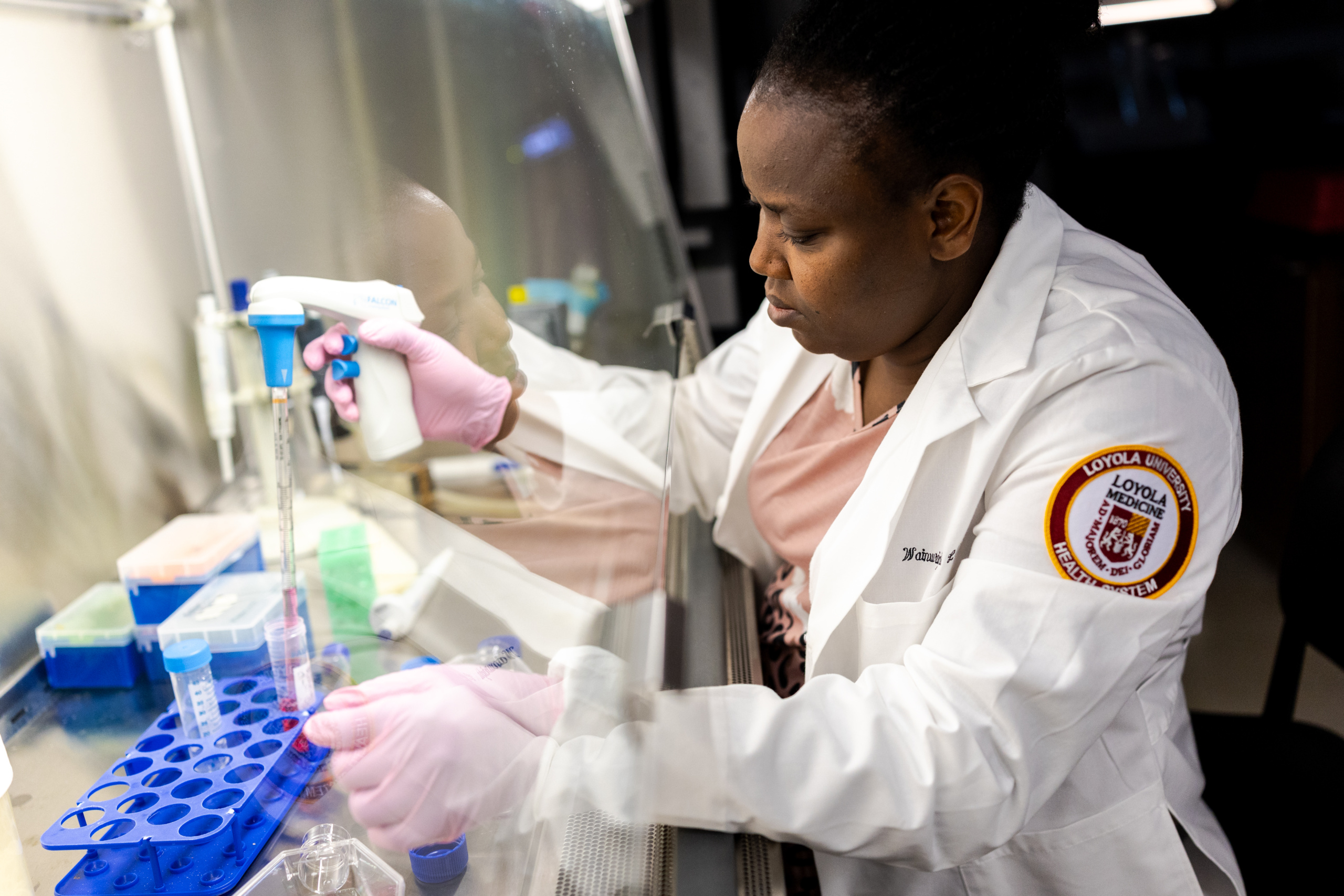
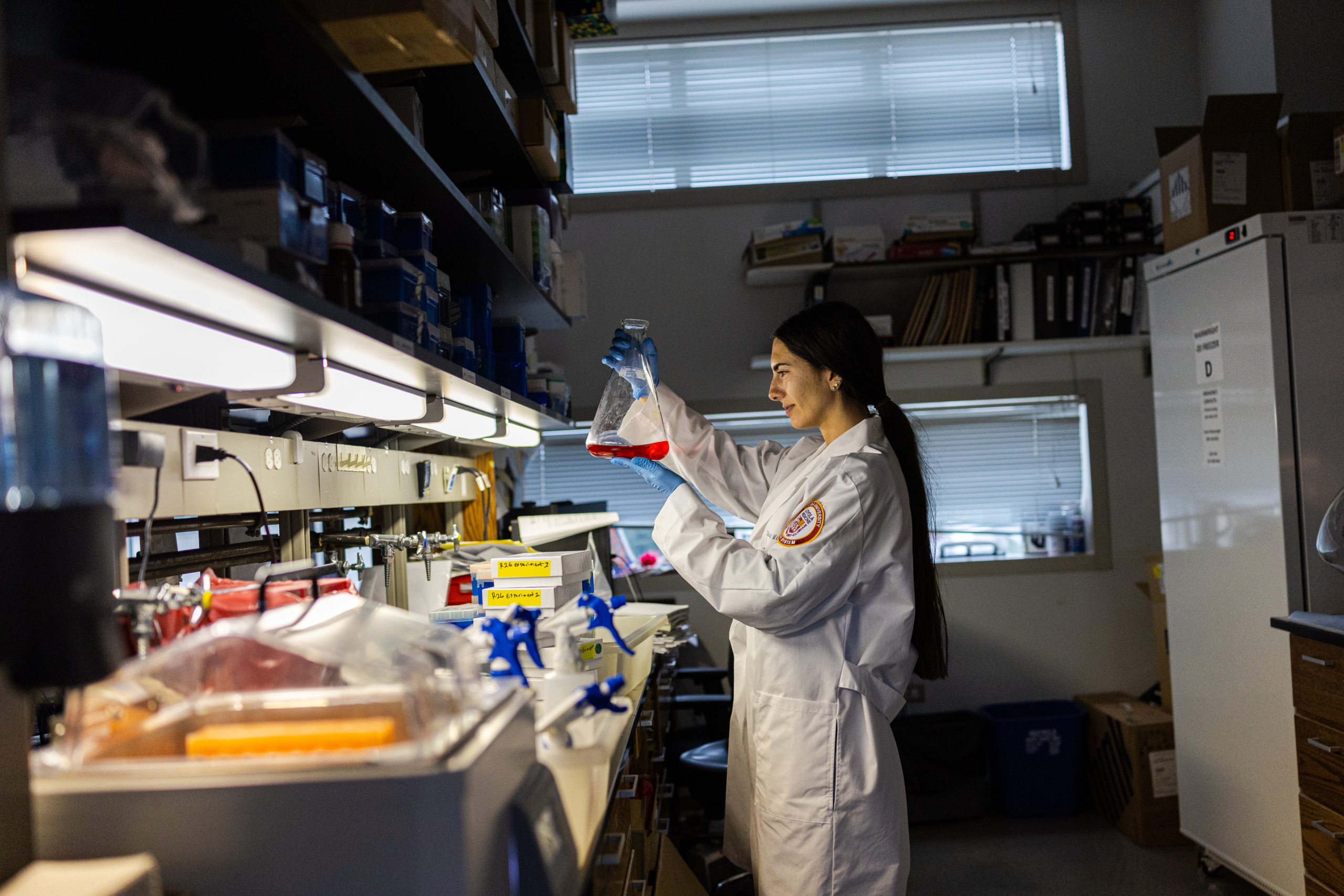
Inside the Wainwright Lab—a second-floor suite in the Cardinal Bernardin Cancer Center outfitted with microscopes, centrifuges, and ultraviolet lights—Wainwright and his eight-person research team are actively developing and testing the IDO1 PROTAC drug as a proof of concept. At the same time, the researchers—a mix of professors, graduate students, medical students, postdoctoral scholars, and neurosurgical residents—are investigating the safety and efficacy of another drug they believe holds promise for treating glioblastoma genetically: a ribonucleic acid (RNA)-based IDO1 antisense oligonucleotide (ASO).
Supported by two prestigious National Institutes of Health (NIH) Research Project (R01) grants and private donations, the members of Wainwright’s research team—many of whom followed him from Northwestern University when he took a faculty position at Loyola in January 2023—are driven by a common purpose: finding a cure for glioblastoma.
“The work of Dr. Wainwright and his team is crucial—critical, actually—for us to look at avenues for attacking these tumors,” said Vikram Prabhu, a professor of neurological surgery at Stritch and a board-certified neurosurgeon at Loyola University Medical Center. “Because what we have on hand can hold the tumor at bay for a certain period of time, but they’re not curative. The best survival rates with current protocols are two to three years.”
Wainwright believes, however, that prognoses for glioblastoma patients could improve significantly in the not-too-distant future. Within three years, he said, the lab’s IDO1 PROTAC drug could be produced in an orally administered formulation and cleared by the Food and Drug Administration (FDA) for clinical testing in glioblastoma patients. “We were the first people on the planet to make an IDO1 PROTAC. And since we began making it and publishing our findings, others have started making it too, but no one has made a molecule nearly as potent as what we currently have,” Wainwright said.
The second drug under investigation also gives reason for hope. Typically injected into the thecal sac surrounding the spinal cord, the IOD1 ASO drug is a synthetic complement to the IDO1 gene that travels to the brain to “cause RNA silencing, so that IDO1 RNA cannot be made into IDO1 protein,” Wainwright said.
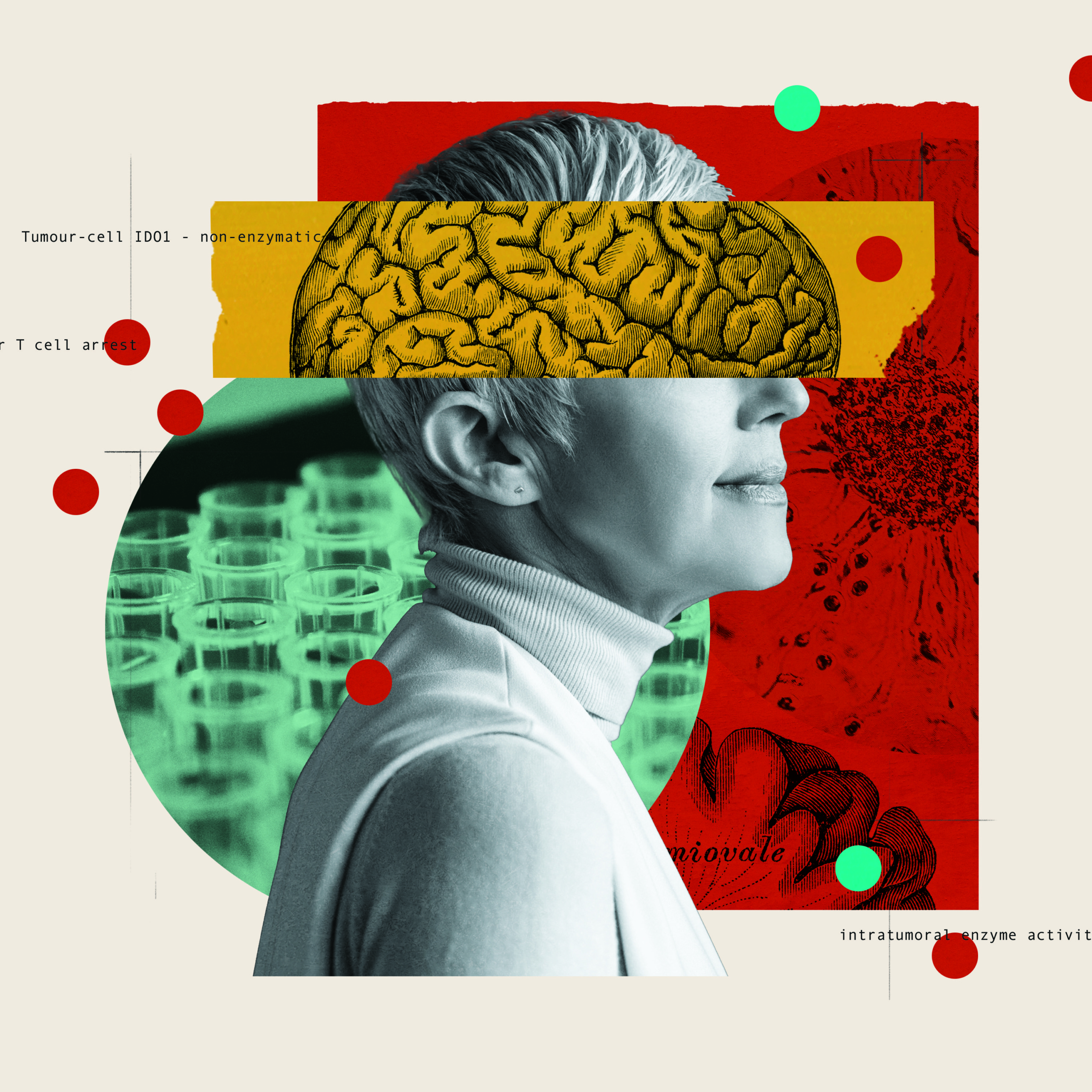
While the science behind these IDO1 inhibitors is remarkably complex, their function can be boiled down to a three-tiered cascade.
“There’s the IDO1 gene that’s being transcribed into IDO1 RNA, there’s the IDO1 protein that’s being translated from the IDO1 transcript, and then there’s the IDO1 enzyme activity that comes from the protein,” said Taylor Koch (PhD ’28), a third-year graduate student who is testing the PROTAC drug’s effect in mice injected with glioblastoma. “You can basically think of it as a flowchart, where if you inhibit IDO1 at the top, then anything downstream of that doesn’t happen.”
However, if the IDO1 gene eludes the first line of attack—at the RNA transcription level—there are additional inhibitory mechanisms downstream to help eradicate it. “The immune system sees the tumor, and it’s revving the engine, revving the engine, but the brakes are locked,” said Michael Egozi (MD/PhD ’31), a graduate student in the lab who tests RNA-based therapies in mice. “So we’re trying to find the point of highest tension in the brake, snip it, and then let the engine of the immune system roar back to life and eradicate the brain tumor.”
Suppressing IDO1 is a win on two fronts. “When we neutralize IDO1, we’re able to enhance the number of cancer-killing T cells that carry out tumor-cell rejection,” Wainwright explained. “And not only do more of those tumor-fighting T cells get into the brain, but at the same time, fewer immunosuppressive regulatory T cells, as well—the latter of which suppress the immune response.”
The work of Dr. Wainwright and his team is crucial—critical, actually—for us to look at avenues for attacking these tumors.
— Vikram Prabhu, a professor of neurological surgery in the Stritch School of Medicine
The immunotherapy drugs the lab is developing become even more promising, Wainwright says, when considered as one arm of a multimodal treatment. In a groundbreaking study of 18 patients with glioblastoma, published in Clinical Cancer Research in May, Wainwright and his fellow researchers studied a PD-1 inhibitor sold as the immunotherapy medication nivolumab, which stimulates the immune system to kill cancer cells. The authors noted that when nivolumab is delivered in combination with an oral IDO1 enzyme inhibitor, it “can be safely combined with standard-of-care radiotherapy and chemotherapy for patients with newly diagnosed glioblastoma.”
The treatment wasn’t just safe; it produced an astonishing signal, with “multiple patients who survived five years after their glioblastoma diagnosis,” Wainwright said.
Moreover, if the new class of IDO1-neutralizing drugs Wainwright and his team are developing can be integrated successfully into a comparable immunotherapy approach, they could lead to even better survival outcomes.
“We hypothesize that we can take the radiation and PD-1 modality, combine it with our other IDO1-targeting drugs, and increase the number of patients making it to that five- or even ten-year landmark,” Wainwright said.
A culture of caring and compassion
For patients with glioblastoma and their loved ones, treatment advances cannot come fast enough. The devastating brain cancer is stubbornly resistant to medical intervention, in large part because of where it develops.
Glioblastoma is physiologically insulated by the blood-brain barrier, a semi-impermeable skirt of tightly packed cells surrounding the brain that protect neural tissue from infiltrating pathogens, toxins, and excessive inflammation. Only a limited number of T cells are able to enter the cerebrospinal fluid and reach the brain to fight infection. This not only makes it harder for the immune system to detect and attack cancer cells, but it also obstructs the path of medications that promote the immune response.
The current standard of care—surgical resection of the tumor, radiation, and chemotherapy—is largely ineffective for most patients with glioblastoma. Around 80-85% of patients, who are typically older adults and mostly men, die within two years of their diagnosis. What’s worse, the disease’s progression can lead to cognitive decline, speech loss, headaches, physical weakness, and dangerous seizures. It is, by all accounts, a horrible disease.
Koch, a soft-spoken graduate student with neatly groomed brown hair, has witnessed the heart-rending effects of the disease firsthand. Her father, Mark Koch, was diagnosed with glioblastoma in January 2020, when she was a first-year student at Boise State University. In her dorm room, after learning of the diagnosis, she frantically Googled the disease to learn about its progression. “I saw 14 months of average survival, and that was not good news to have,” she said.
Would her father always be able to speak? To walk? The answers she found were murky. So much depended on the location of the tumor, and even accounting for that, patients’ prognoses varied widely. Koch was eager to learn more. On breaks from school, she joined her father on visits to the University of Washington Medical Center (UWMC) where he received chemotherapy, radiation, and treatment with a wearable, FDA-approved Optune device that adheres to the skull with adhesive patches and produces a low-intensity electric field to target dividing cancer cells.
In his mid-fifties—a relatively young age for a glioblastoma diagnosis—her father initially responded well to treatment. Still, “as the tumor progressed, his critical thinking and his personality definitely changed, which, as a family, is very difficult to deal with,” Koch said. Three years after his initial diagnosis, Mark Koch had a seizure that resulted in a car accident. He opted not to continue treatment and spent his final six months in home hospice care.
“Towards the end, he just slept a lot. He woke up for meals. We put a hospital bed on our first floor and he used a walker to get to the kitchen table,” she said. “It was described to me as, ‘You grieve them before they die,’ because you lose who you remember them as, before they lose their life.”
The experience, while devastating, inspired Koch to enroll at Stritch to study the disease. Her family’s story is a powerful illustration of why the work of the Wainwright Lab is so important.
“The hope is there for us to improve outcomes and increase the quality of life and longevity for those with glioblastoma. We have to care about the future. And that’s where people like Dr. Wainwright come in,” said Anand Germanwala, a professor in the Department of Neurological Surgery at the Stritch School of Medicine and a neurosurgeon at Loyola University Medical Center and the affiliated Edward Hines Jr. Veterans Affairs Hospital.
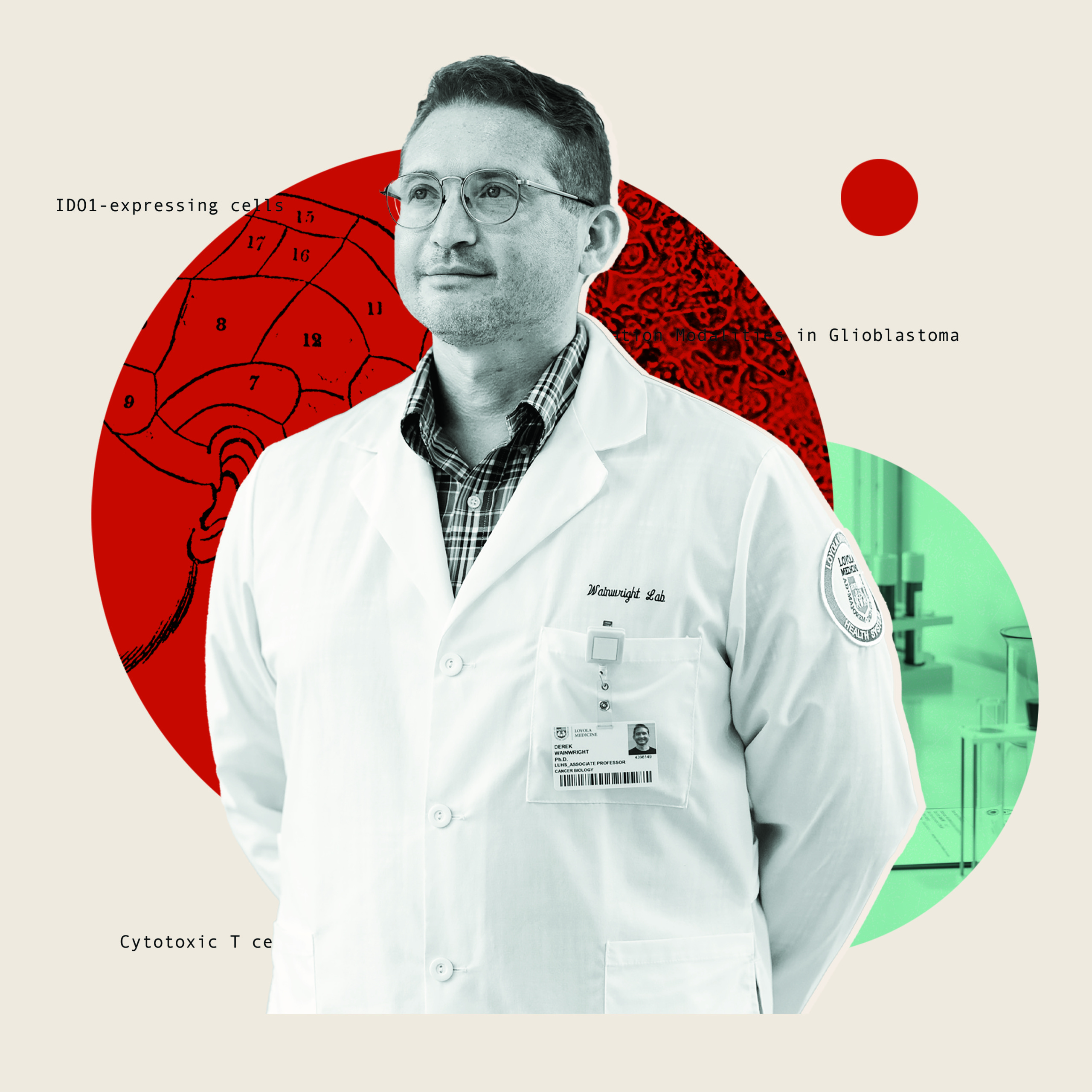
The cutting-edge nature of Wainwright’s research is part of what led Germanwala—the interim chair of the Department of Neurosurgery from 2024 to 2025—to recruit him to Stritch. A rising star among cancer researchers, Wainwright has been the lead or senior author on 42 peer-reviewed papers, received the esteemed NIH Pathway to Independence Award as a postdoctoral scientist, and served as an assistant professor at the University of Chicago’s Pritzker School of Medicine and Northwestern University’s Feinberg School of Medicine. But it was his humility that most impressed Germanwala.
“We wanted somebody who shared our vision of mutual collaboration: somebody who was a team player, somebody who didn’t have an ego,” Germanwala said. “His personality was the kind that would fit very well in our department. He was very skilled and talented, and his character was very good.”
William Small, director of the Cardinal Bernardin Cancer Center and chair of radiation oncology at Stritch, was also part of the selection committee. He calls Wainwright “one of the best basic science researchers I’ve been around” and said his scientific expertise and experience with clinical trials align with the center’s goal of becoming a National Cancer Institute (NCI)–Designated Cancer Center, of which there are only 74 in the country.
“So the things that Derek is doing in his lab, we want to translate into the clinic and then bring those clinical trials to the national stage to change the standard of care and improve the survival of brain cancer patients,” Small said. “That’s what the NCI wants in a cancer center: bench-to-bedside innovation that moves cancer care forward.”
As exciting as these possibilities are, the day-to-day work of cancer research—grant writing, lab trials, FDA submissions—can be all-consuming. What drives Wainwright to dedicate himself assiduously to these tasks is a personal connection to the Jesuit value of caring for others, a calling brought into focus by the lived experience of losing a loved one to cancer.
Growing up in Port Byron, Illinois, a rural town along the Mississippi River, Wainwright spent much of his childhood prowling the river’s edge. He enjoyed collecting water samples to examine under a microscope. By second grade, he’d hatched a plan—or at least the hazy outline of one—to work for the Centers for Disease Control and Prevention (CDC). “The HIV field was very big when I was a kid. I remember hearing about Magic Johnson [the former NBA star], and it motivated me to want to go to the CDC and make a difference,” Wainwright said.
Seeing a patient in the operating room or going over their scans with a doctor in a tumor board is very humanizing. And that gives me a lot of comfort: knowing I’m not just siloed away in a research laboratory.
— Michael Egozi (MD/PHD ‘31)
In 2002, he enrolled at Stritch as a master’s student in what was then the Department of Cell Biology, Neurobiology, and Anatomy. Two years later, he went on to pursue his PhD, funded by the Lou Gehrig Society, to study amyotrophic lateral sclerosis.
“And I just really loved the program,” Wainwright said. “Then, when I was in the latter half of my PhD at Loyola, I got a call from my buddy who ultimately stood up as the best man in my wedding. He told me that one of our mutual best friends, Clint Franks, had died from a brain tumor. And I was totally devastated. I never cried so much in my life as when I heard about it. And I thought, ‘I cannot continue to pursue ALS because of what happened to Clint. I have to go into brain tumor research.’ It forever course-corrected where I would take the rest of my career.”
Wainwright’s students say his caring and compassionate spirit is infectious and part of what guides his patient-oriented research approach.
“As a mentor, he pushes us to think very critically about the clinical relevance of the experiments that we run because, at the end of the day, this is about exploring new boundaries in science, but also about improving outcomes for patients with glioblastoma,” Egozi said. “Seeing a patient in the operating room or going over their scans with a doctor in a tumor board is very humanizing. And that gives me a lot of comfort: knowing I’m not just siloed away in a research laboratory.”
Koch recalls, in particular, the support she felt from her colleagues in the final weeks of her father’s life. “When it got close to the end, my mom could tell. And so, she said, ‘I think you should come home.’ It was really nice to be in a place that understood, because I was only rotating through the lab at the time and had not yet joined as a permanent student. I was a first-year student and unsure what was even happening with my dad. Everyone in the lab said, ‘You need to go home. This does not matter. Go home; be with your family.’”
A bench-to-bedside approach
Since Wainwright arrived at Loyola in January 2023, he has been on a path to raise the profile of the Cardinal Bernadin Cancer Center, not only by conducting novel immunotherapy research but also by forging partnerships with practicing clinicians who hold joint appointments at Stritch and Loyola University Medical Center. He, Prabhu, and Germanwala, for instance, have collaborated as part of a broader institutional effort to preserve small sections of consenting patients’ surgically resected brain tumors for translational research.
On the second floor of the Russo Surgical Pavilion at Loyola University Medical Center, Germanwala and other neurosurgeons perform tumor resections using fluorescence guidance, computer-assisted neural navigation, and intraoperative ultrasound to ensure safe and thorough removal of cancerous tissue. Some of the resected tumors are frozen and kept in an on-site biobank. Others are transferred directly to Wainwright’s lab for immediate analysis of fresh tissue.
“It’s a very symbiotic relationship where we work in the operating room, and as surgeons we perform the surgery, but then Dr. Wainwright is a partner who can take those resected tumors and dissect and analyze down to a molecular level the tissues that we send to him,” Prabhu said.
In April, in the Russo Surgical Pavilion, a 32-year-old man with glioblastoma presented before the clinical team with a golf-ball-sized tumor on the left side of his brain. After plotting the tumor’s location using stereotactic navigation—a GPS-like imaging technique that combines high-resolution MRI scans with a 3D coordinate system to map the brain—Germanwala’s team made a four-inch incision on the side of his head, removed a piece of bone, and detected glioblastoma underneath a thin membrane surrounding the patient’s brain.
In his lab shortly after the surgery, Wainwright examined a portion of the reddish-gray tumor and made a curious discovery. “There’s typically a protein [IDO1] that is in the cytoplasm of these cancer cells,” Germanwala said, recalling a conversation he had with Wainwright after the operation. “But Dr. Wainwright discovered the protein not only in the cytoplasm of the cancer cells, but also outside the cells—opening up a new line of questions as to why and what it was doing there. The point is, we’re making some key findings from fresh tumor tissue that you can’t uncover in a frozen specimen that’s thawed weeks, months, or even years later.”
The discovery of IDO1 outside the cancer cells corroborated Wainwright’s theory that the protein is active in the extracellular space, a possibility overlooked in many earlier studies. More than that, it showed the research benefits of collaborating with neurosurgeons to study freshly resected patient brain tumors.
“Every tumor I resect becomes an opportunity—not just to help the patient in front of us, but also to better understand the disease and move closer to a more effective targeted therapy,” Germanwala said.
Nancy Zeleznik-Le, chair of the Department of Cancer Biology at Stritch, said the department was launched in 2018 with such bench-to-bedside collaboration in mind. With a mandate to use basic science to improve therapy for a range of cancers, 12 primary faculty members from across Stritch’s medicine, surgery, and pathology departments conduct transdisciplinary research that is giving rise to new discoveries.
“One of the reasons we succeed is through collaborations and trying to help each other out,” Zeleznik-Le said. “I study leukemia. There are many different types of leukemia, almost all of which used to be death sentences. And now there are therapies that have come to light that have changed what was once a death sentence within two years to ‘You’re going to survive.’ You take this nontoxic inhibitor, and you will live for decades.”
“And that’s what Derek is doing in trying to ramp up the effectiveness of these immunotherapies,” she continued. “Unfortunately, the inhibitors work on B-cell lymphoma, but they don’t work on brain tumors. How can we shift that? They should work, and we need to be smart about how to make immunotherapy work for everyone.”


