

Stuart Dybek’s (BS ’64, MA ’68) ‘Chopin in Winter’ hits the right chords on stage
October 14, 2026
Share



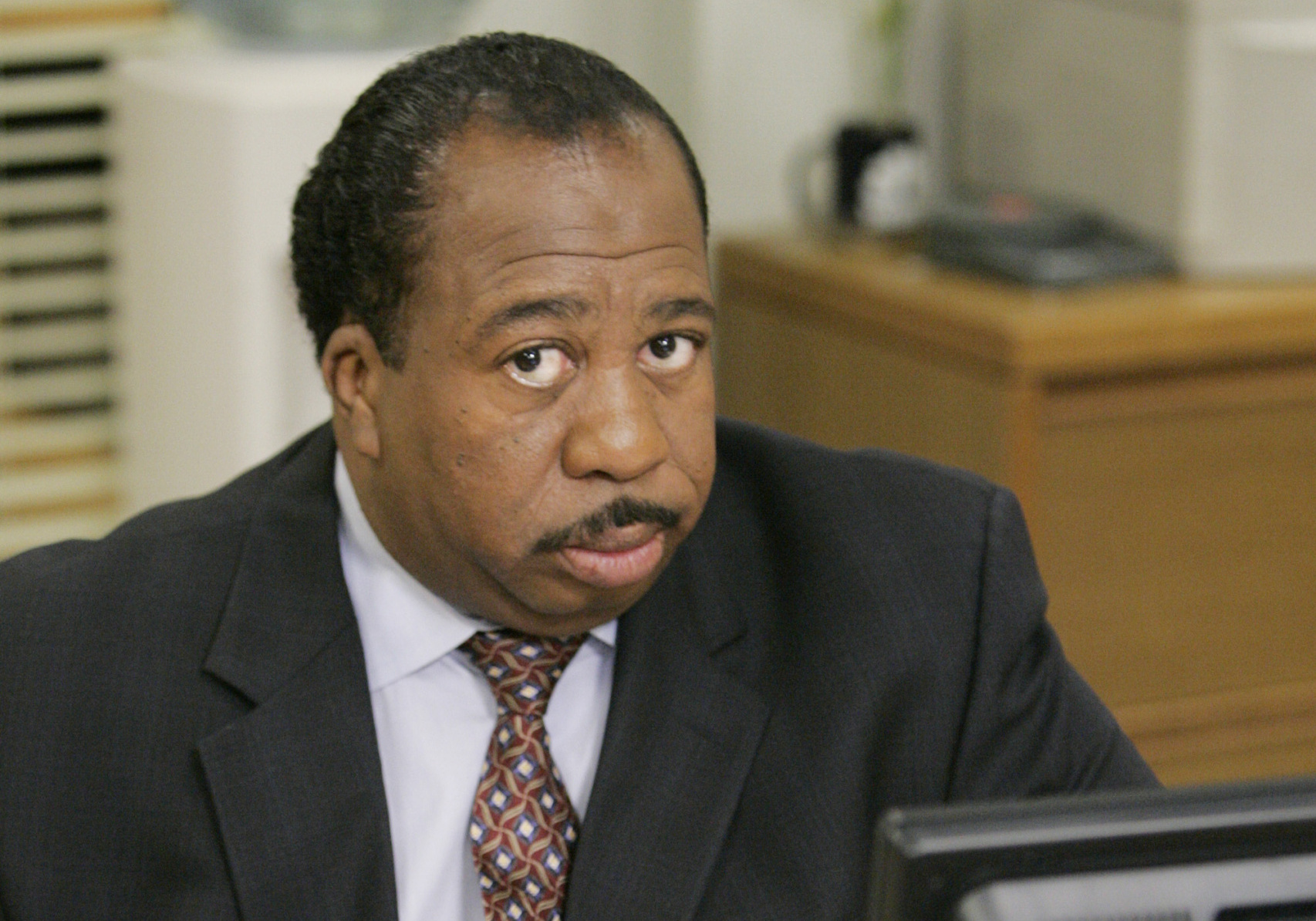
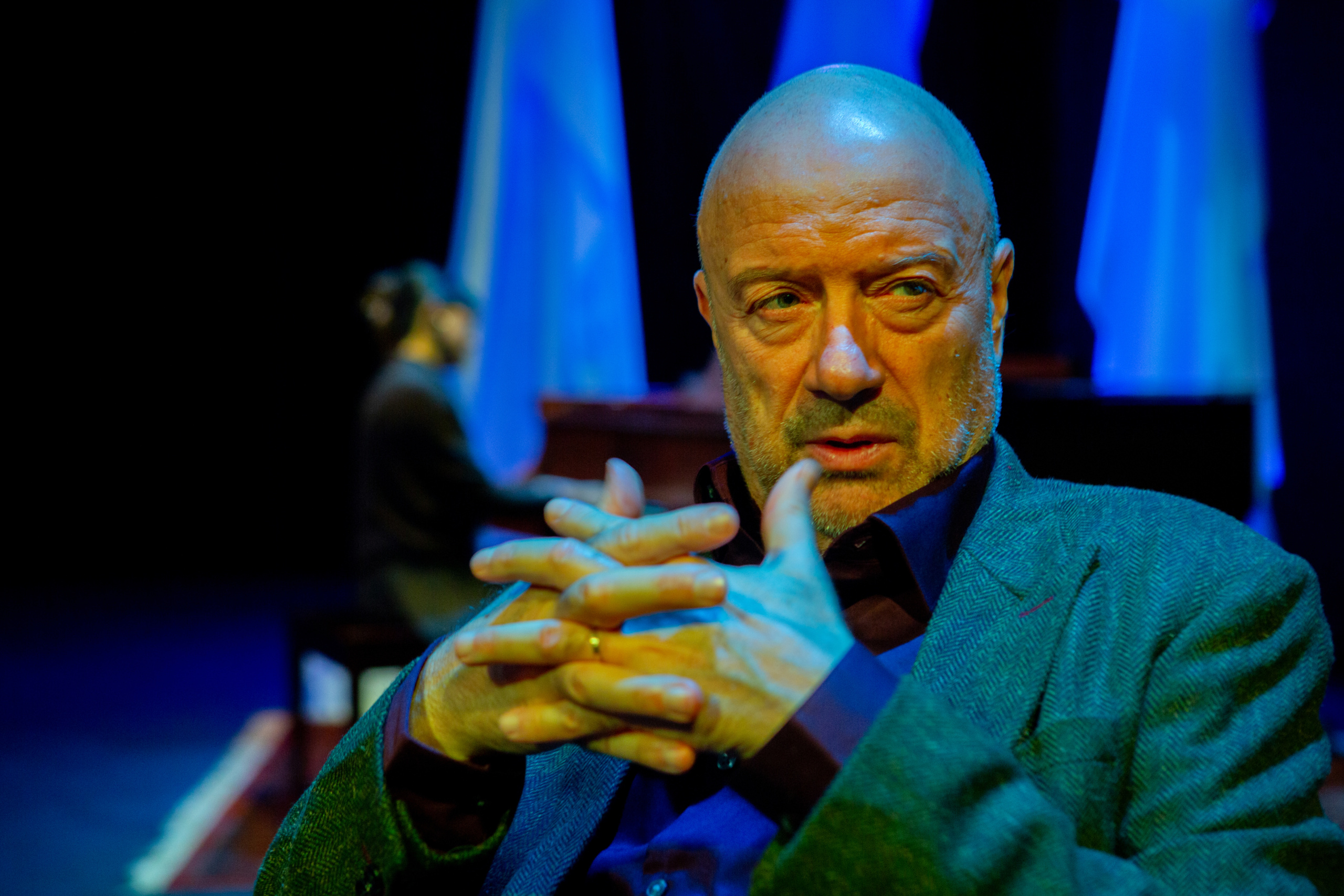
When actor Yasen Peyankov first appears on stage for Chopin in Winter, a theatrical and musical production of the celebrated story by Chicago author and MacArthur Fellow Stuart Dybek (BS ’64, MA ’68) at the Chopin Theatre, he turns to the audience and begins reading from a stack of typed pages—a script transposed word for word from the original story. Is he a storyteller? The voice of the narrator? The characters whose voices permeate the story? In a way, he is all of those things.
“In a way, it’s very Brechtian, where you step from one character to the next, and just by giving one or two characteristics, you’re basically narrating what they said, and at the same time, telling a story,” Peyankov says.
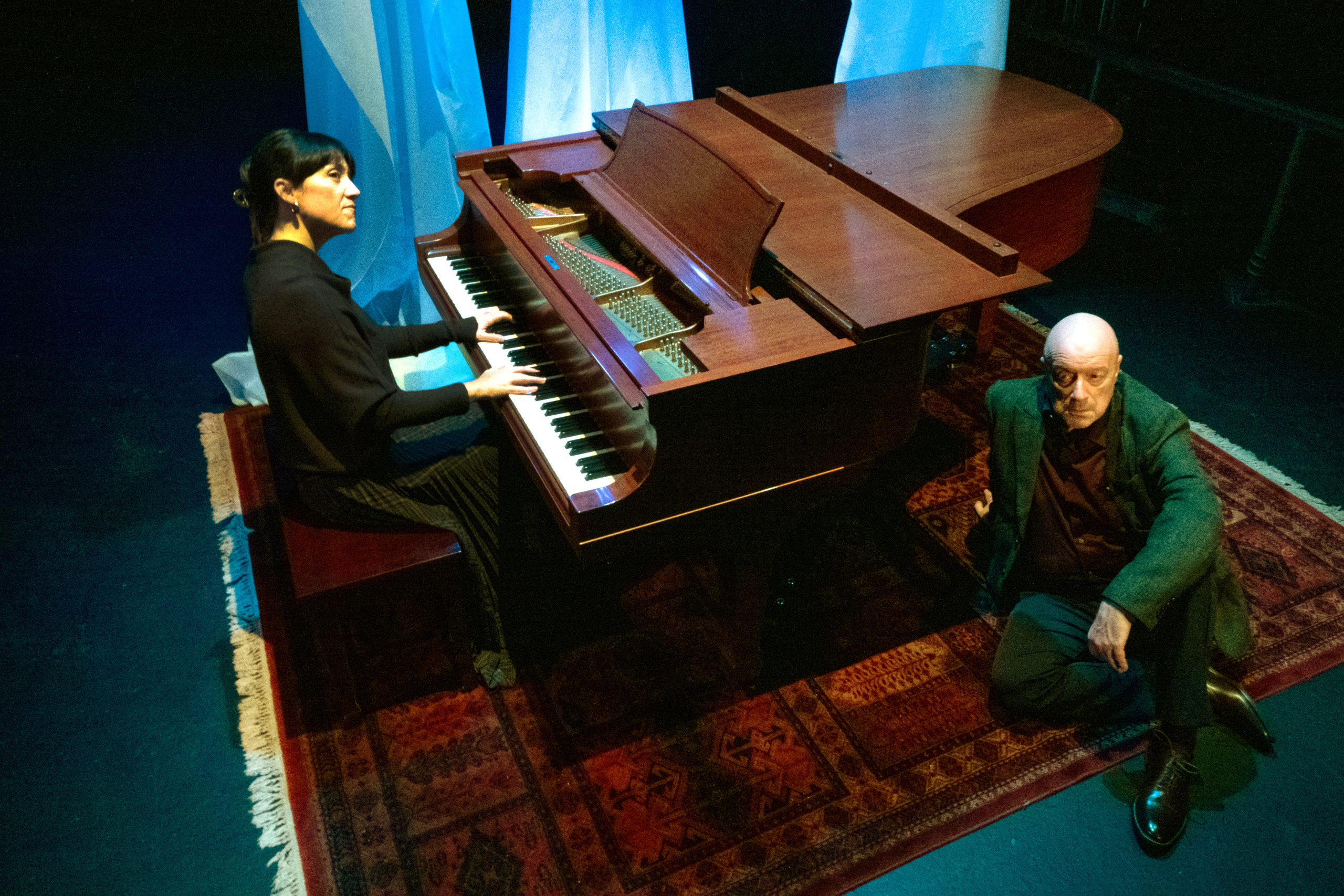
Moments later, concert pianist Jana Pavlovska emerges, ghostlike, from behind the rear curtains, stepping down a short flight of stairs onto a set furnished with nothing more than a kitchen table, a bed, a writing desk, a piano, and white gossamer curtains suspended from the ceiling to suggest the presence of windows. Taking a seat at the piano bench, Pavlovska begins to play the first bars of Frédéric Chopin’s Nocturne No. 20 in C# minor, one of the most recognizable pieces by the beloved Polish composer whose music dominates a semiautobiographical story of memory, loss, and transcendence set in Chicago’s Pilsen neighborhood shortly after World War II.
Under the creative direction of Dexter Bullard, Peyankov and Pavlovska are the only two performers on stage, an intentional choice, much like the decision to preserve the language of the original text and draw heavily on the music of Chopin.
“I made a decision early on that the only thing acceptable for the story would be a verbatim telling of it,” says Bullard. “I always wanted it to be absolutely essentialist. What are the essential parts of this, and how can I let the beauty of the prose and the beauty of the notes lead the meaning?…Stuart is very furnished. His very detailed, beautiful prose leads you absolutely in. And Chopin is unparalleled. It’s like cooking: if you have amazing ingredients, stay out of the way.”
Previously published as a short story in Dybek’s 1990 fiction collection The Coast of Chicago, the stage adaptation, like the original, travels across memories of the adult narrator, Michael. As a child, Michael lives with his widowed mother, who lost her husband in the war. His life takes a turn when, as revealed in the story’s first sentence, his grandfather, “Dzia-Dzia came to live with us in Mrs. Kubiac’s building on 18th Street” and “Mrs. Kubiac’s daughter, Marcy, came home pregnant from college in New York.”
During the play, Michael meets Marcy—the pianist played wordlessly by Pavlovska—only once, in the apartment’s shared stairwell, but he is enthralled by the mysterious force of her music, which he hears from his window and reverberating through the trash chute from the flat above.
For a boy too young to understand, intellectually, stories of war, domestic violence, and racism that bubble up at the kitchen table, or the wayward habits of his aging grandfather, who “would simply vanish without telling anyone, then suddenly show up smelling of liquor, wearing his two suits one over the other, only to disappear yet again,” music is a life-affirming and cathartic force.
“He can’t understand Chopin in terms of classical music,” Dybek says of Michael. “He can’t understand what Chopin’s life was like when he was writing this music, but he understands something. He understands the ‘can’t be said.’ Only music could say it.”
Blending fact and fiction
Much of the story draws parallels to Dybek’s life. As a child, he grew up in a working-class family that lived for many years in a Pilsen flat just off Blue Island Avenue, where he often overheard his upstairs neighbor playing piano. Much like Michael, he attended Catholic school—St. Procopius School, just across the street from Thalia Hall—and was a regular congregant at his neighborhood parish.
The religious influence emerges in the fabulist elements of “Chopin in Winter,” along with the mythical notes that populate much of Dybek’s fiction and poetry, which has received a PEN/Malamud Prize and several O. Henry Prizes and been compared to the work of literary giants like Ernest Hemingway and Sherwood Anderson.
“[The Catholic influence] was really powerful on me,” Dybek says. “In second grade, before Edgar Allen Poe, who I didn’t know yet, I memorized the whole prayer Dies Irae [Latin for “Day of Wrath”]. Faith kind of asks you to believe in magic, in miracles, and the divine, all those things.”
Dybek’s lifelong love affair with Chopin, a composer widely revered for his impressionistic interpretation of Polish triple-meter dance forms—mazurkas, polonaises, and waltzes—was likewise “bred” into him from a young age; the first movie he ever saw, at the now-shuttered single-screen movie house, The Milo, in Pilsen, was the 1945 Chopin biopic Till the End of Time.
But if the story draws on the painful moments of Dybek’s life, it also takes imaginative leaps. One night when the power goes out, Michael, who struggles with spelling and penmanship, hears Marcy playing Chopin’s posthumous waltz and spells “new words, words I’d never heard before, yet as soon as I wrote them their meanings were clear, as if they were in another language, one in which words were understood by sounds, like music.”
And if many of the ghostly qualities of Dzia-Dzia’s character are based on Dybek’s grandfather (Dzia-Dzia means grandfather in Polish), who was buried alive for two days during a mine disaster in Johnstown, Pennsylvania, his identity is transformed in the story. He becomes a father figure to Michael, quizzing him on the names of Chopin’s pieces and pointing out the “boogie woogie” music that signals a shift in Marcy’s character and intimates her romantic relationship with a Black man on the South Side.
“So there’s that kind of amalgam between real life and fiction, where the imagination crosses over, and it’s one of the great joys of writing,” Dybek says. “People say, ‘Why do you do it? It’s hard. You don’t get any money.’ Well, when you’re doing that, it’s just so blissful.”
[The Catholic influence] was really powerful on me... Faith kind of asks you to believe in magic, in miracles, and the divine, all those things.
— Stuart Dybek (BS ’64, MA ’68)
The right professor at the right time
At age 17, Dybek enrolled on a pre-med track at Loyola—a decision made, in part, on the urging of his parents, who believed in practicality and saw a medical career as a pathway to prosperity.
“Nobody in my family had gone to college. My father worked in a factory, and my mother, when she wasn’t being a housewife, was a truck dispatcher. It was a total working-class family. I feel like it was a great gift to grow up in a family like that,” Dybek says. “But what was possible for them was capped. So they made sure to put that possibility in how they were raising their kids.”
During his freshman year, Dybek was placed in a remedial English course with Professor Dion J. Wilhelmi, who introduced him to literary giants like Charles Dickens, Mark Twain, and Robert Frost, and recognized his gift for writing. In one class, Wilhelmi read lines from T.S. Eliot’s “The Love Song of J. Alfred Prufrock,” a Modernist poem told from the point of view of a middle-aged man plagued by indecision.
For Dybek, it flipped a switch. “I had never heard imagery as wild as that. And I was the only guy who raised his hand in the class when he asked who liked this poem better than the other poem. It just blew me away.”
That summer, on the steps of the Cudahy Library, with a full moon shining over Lake Michigan, he decided to change majors and commit himself to writing. “It wasn’t like I wasn’t interested in pre-med. It was just that writing was gnawing at me. I couldn’t get the stories and poems out of my mind,” he says. “D.J. Wilhelmi gave me that little push from outside the family that I needed.
Several other English classes at Loyola contributed to his maturation as a writer, and the University figures prominently in stories like Farwell, which not only takes its name from the Rogers Park street where Dybek lived but also foregrounds a character inspired by Lou Diskin, who owned a Marxist bookstore on Sheridan Road; and Vigil, a Christmas story which alludes to a fleeting college romance on the Lake Shore Campus with an English major named Aly.
“Her favorite books were Lolita and The Diary of Anaïs Nin,” Dybek writes. “If she hadn’t just thrown her lunch into Lake Michigan, she might have been impressed by the literary echo between the Wise Men bearing gifts and my father lugging the shopping bag with the carp down an alley on Christmas Eve, wondering where to dispose of a gift he couldn’t accept.”
If Easter eggs like this owe a debt to his time at Loyola, Dybek’s love of jazz—he played the saxophone and worked at Seymour Records, an erstwhile record store at 439 South Wabash that sold used 78s—also found a welcome reception at Loyola, where he listened to records with professors and wrote an essay on the virtuoso jazz performer and composer Charlie Parker that Wilhelmi saw as a sign of his well-tuned artistic tastes.
“It wasn’t just what I wrote about him. It was who I selected,” Dybek says.
Writing to music
Music continues to inspire elements of his poetry and fiction, and he often writes to jazz and classical music—a sort of audio muse that propels his work in unexpected directions. “I love and envy the profound power of music not just to convey, but to evoke a mood,” he writes in a briefing for the play. “I wrote ‘Chopin in Winter’ to the Arthur Rubinstein recordings of the Nocturnes on 331/3 vinyl LPs. I played them to the glow of old tube gear.”
The artistic residue of those recordings comes through vividly in the story and its stage performance, particularly during the somber moments, such as when Dzia-Dzia’s memory and hearing begin to falter. “Ultimately, the text is very nostalgic,” Pavlovska says. “It’s a memory of a childhood after the Second World War when life was very gray. The music was very much chosen consciously to fit the mood.”
Pavlovska says the selection of Chopin’s pieces in the performance and the way they are played—in intensity, tempo, and harmonic texture—create a conversation with the narration and dialogue that follows the emotional arc of the story. The effect is especially powerful during extended periods of silence, such as when she closes the piano lid with a thud at the end of the final nocturne, signaling Marcy’s departure from the apartment and its profound effect on Michael.
But if the nocturnes are edged with sadness, they also carry hope for Michael, a boy who lost his father in the Second World War and is struggling to make sense of his life, even if words will not suffice.
“Music in the story is a counterpoint,” Dybek says. “It’s a counterpoint to a landlady whose husband beats her before the cops beat him. It’s a counterpoint to the way the uncles are when they’ve come back from the war. It’s a counterpoint to the woman who no longer has her husband…in all those ways, beauty survives.”
The limited engagement performance runs through Oct. 18.
Read more stories from the College of Arts and Sciences.