
Leslie David Baker (BS ’80) on acting, office jobs, and life on set of ‘The Office’
April 23, 2026
Share



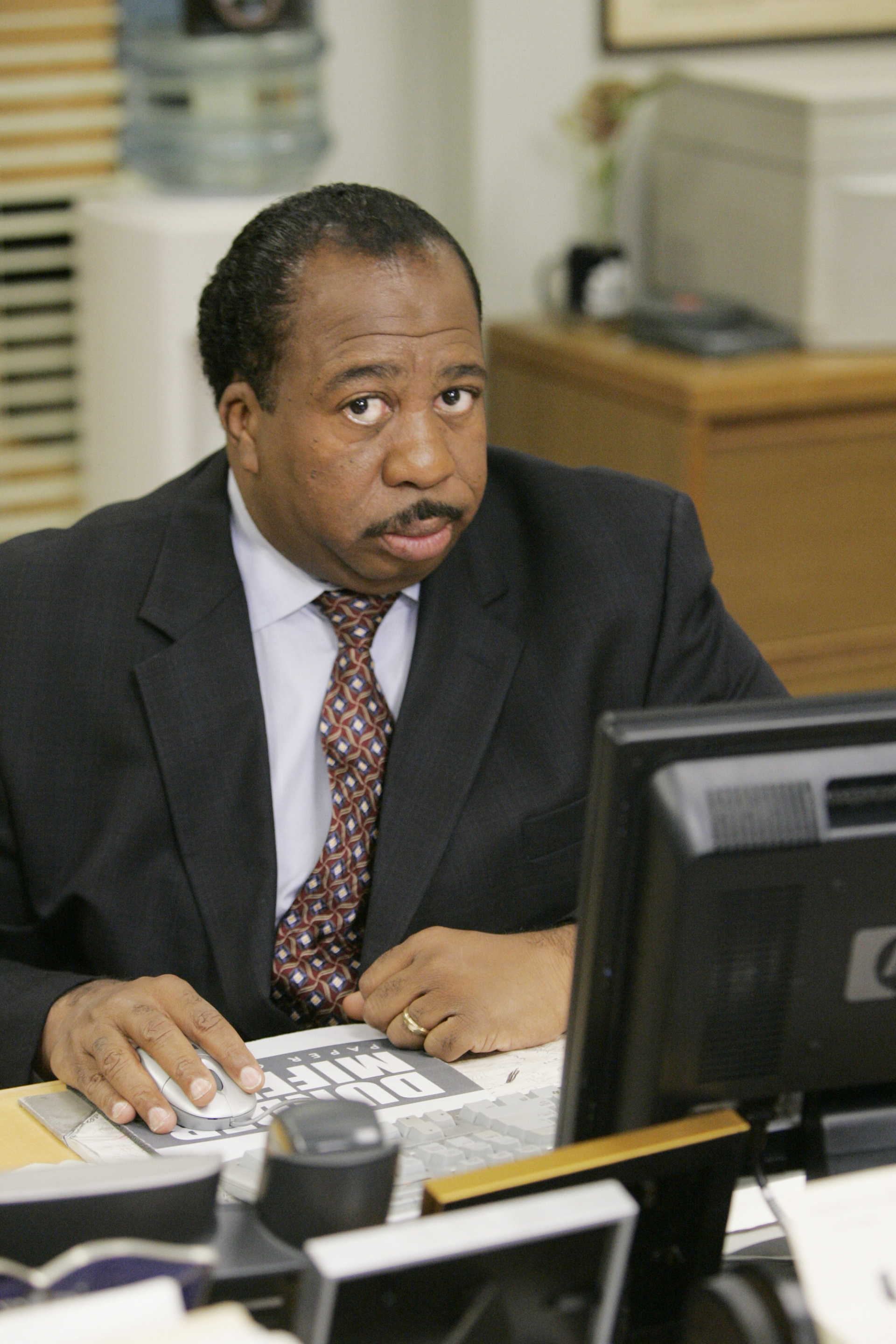
Leslie David Baker (BS ’80) is best known for his role as Stanley Hudson, the chronically grumpy sales rep in NBC’s mockumentary-style, cringe comedy The Office. The native South Sider’s journey to Hollywood stardom is shaped as much by his biting wit and ability to “editorialize with his face” as his experience of office life in Chicago, where Baker worked for the City of Chicago’s Board of Education, Department of Health, and Office of Cable and Communications.
Less well known but just as vital to his career, Baker says, was his education at Loyola University Chicago. The applied psychology major studied at the Rome Center and performed in N. R. Davidson’s El Hajj Malik: A Play About Malcolm X, directed by the late Jonathan Wilson. “Everything—I can honestly say everything I ever learned at Loyola, I have used it,” Baker said.
The 68-year-old actor, who lives in the Sherman Oaks neighborhood of Los Angeles, is now at work on several short films and commercials, along with a new venture: opening a Honey Baked Ham franchise. But the stubborn popularity of The Office, the most-streamed show on television in 2020, may be a tough act to follow. Riding a wave of support from loyal fans and newly anointed Gen Z devotees (pop star Billie Eilish has reportedly seen the entire series more than a dozen times), the show has become a cultural touchstone, inspiring memes, podcasts, commercials, spin-offs, and “what-not-to-do” HR training materials.
Loyola Today talked with Baker about his work on the iconic show, and the extraordinary set of circumstances that led him there.
The Office continues to resonate with audiences. What do you think is behind its longstanding popularity?
From ages 4 and 5 to 100, people recognize the humanity in the show. The various personality types, whether you are at a university or working a nine-to-five job or driving a school bus or working in a restaurant, the personality types that you see on The Office are so universal, you see them everywhere in life.
I grew up watching I Dream of Genie, GiIligan’s Island, and I Love Lucy. Those were the iconic shows. Now we’ve become this generation’s iconic show. I know here in LA, we’re usually on about 14 times a day or more. Multiply that across 50 states, not to mention foreign countries. And we’re on all of the social network memes. People will sit in meetings or church or somewhere, and instead of saying something, they’ll just send a meme: sometimes of my face, sometimes Phyllis’s [actress Phyllis Smith who plays Phyllis Vance]. They say a picture is worth a thousand words. Well, a meme from The Office is worth 10,000.
That comfort-food aspect of the show was demonstrated a million times over during the pandemic. People went from being in an office, in school, wherever, and suddenly they were at home with their families. By watching The Office, they were able to stay in touch with the workplace as a concept, as a construct.
So to say that we are less than being part of American nomenclature, no, we’re all over the place. I’ve visited college campuses—Princeton, Purdue, the University of Illinois—and 18 and 19-year-olds come up and say, “Yeah, I watched this show. This helped me get through my finals. This helped me de-stress.”
How did you get into acting at Loyola?
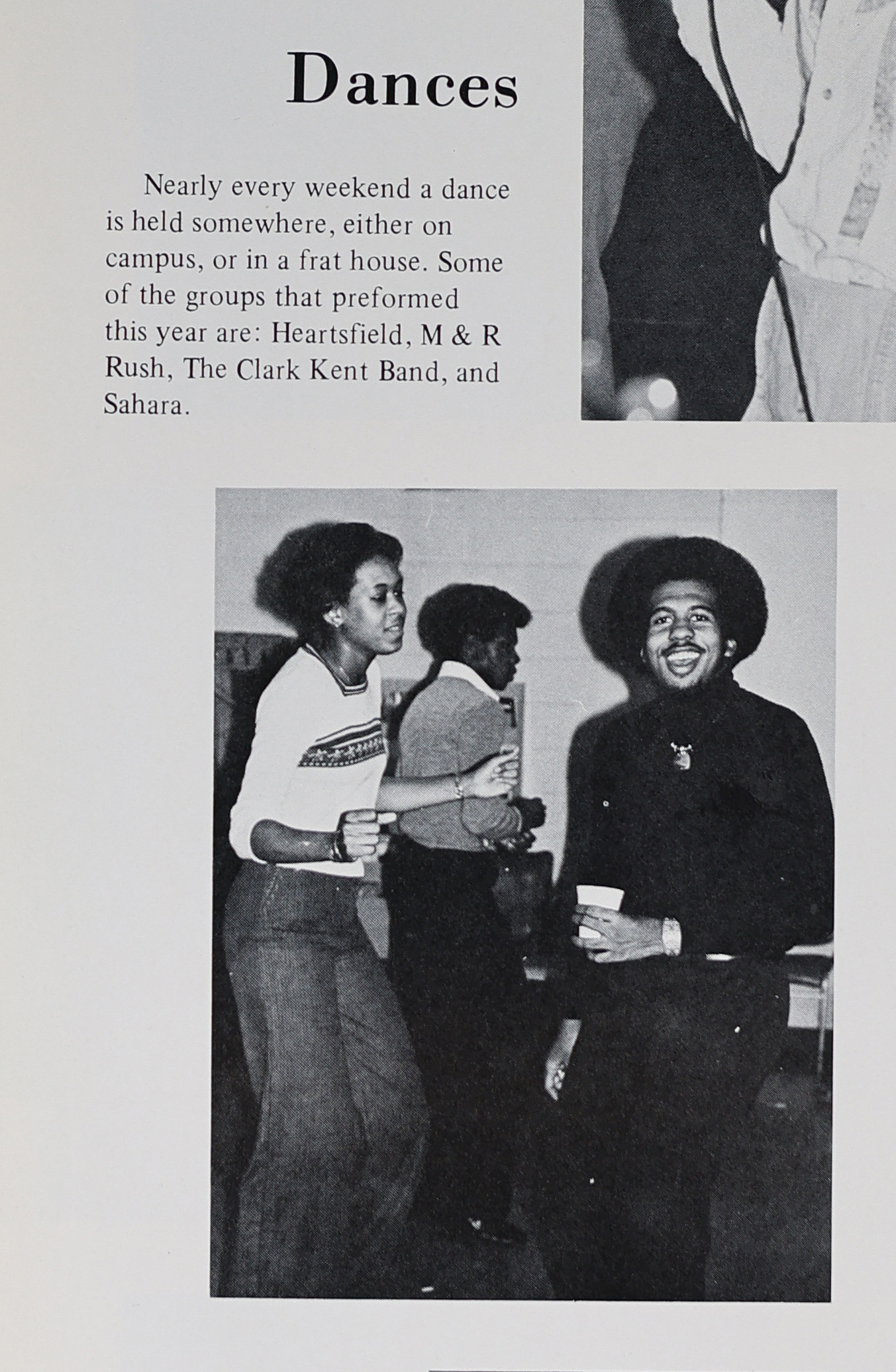
By the time I got to Loyola, I was originally—like 99 percent of people who go to college—a biology/pre-med major. [Later, Baker switched his major to applied psychology]. And I got to Loyola and did a play my freshman year with the late Jonathan Wilson, and had a great time doing that. I used to just go down to the set and read scripts and hang out. And it was always a fun, welcoming environment.
What was the play?
El Hajj Malik: A Play About Malcolm X. The way the play was written, everybody got a chance to be the voice of Malcolm X at one time or another throughout the show.
Were there lessons you took from that early experience that stuck with you later in your acting career?
I think just being so welcomed in the theater department, even though I wasn’t a theater major. They were always looking for people to help with sets or read scripts or run lines with somebody, and they never acted like you were intruding.
I always liked that about the theater community, in general. Later on, when I was acting at different venues around Chicago after I left Loyola, I had a chance to work with Jonathan Wilson, again, a few more times. He did The Great White Hope at Truman College, and I got a chance to do that with him.
How did you get cast in The Office?
My big first gig was a show called Maggie. And, basically, I played an ice cream truck salesman who found a porcupine in his garage and took it to the vet. But the show was at Paramount. And I remember driving up to the gate, and the attendant said, “Oh, Mr. Baker, they’re expecting you.” And I thought, “I’m expected at Paramount, wonderful.” I had a little kidney-shaped trailer that I couldn’t even stand up in, but I was working, and that was after being here only one month.
Fast forward five or six years, and I got a call for a TV show called The Office. They said, “It’s a British show.” And I went, “Oh, okay,” because there was another show that had come over called Coupling the year before, and it didn’t do anything. So I didn’t expect too much to come of it. I went to the audition, and they invited me for a callback. And the casting director, Alison Jones, told me, “When you go to the callback, don’t go in there dressed as nicely as you are.” She said, “[Stanley is] rumpled and a little cranky.”
At the callback, there were about 50 to 75 people auditioning for all the different roles. And I thought I had time to go to another audition, which was across town. I hopped in the car, drove there, no problem. Got there, did the little audition, nothing spectacular.
On the way back, I ran into an ambulance, school buses, a hearse, every old person that was out driving. So by the time I got back to the audition for The Office, I was cranky and half-sweaty, and my shirt was rumpled and wrinkled. And she comes up and says, “Just do the script the way it’s written. And when you finish that, keep going.” They wanted to see me do some improv. And I was reading with my lovely, lovely friend, Phyllis Smith, who was the casting associate of Alison Jones at the time.
So we did the scene, and when we got to the end, we kept going. Phyllis says, “You were out on that sales call this morning, Stanley. How did that go? I said, “Oh my God, I ran into every old person God made out there. They’re driving like they’re traveling behind a hearse.” And out of the corner of my eye, I could see Greg Daniels [the showrunner and executive producer for The Office] and some of the other people cracking up laughing. About a week or so later, I got a call from my agent, and he says, “You got it.”
Do you have a favorite line or moment from the show?
I’ve got several. In “Take Your Daughter to Work Day,” I got to yell at B.J. Novak [an actor and writer for the show], because he was, according to Stanley, lusting after my daughter, who’s a child. And I got to do the iconic, “Boy, have you lost your mind, because I’ll help you find it. What you looking around for? I don’t care if Jesus comes in this room, he’s not going to be able to help you.” That whole rant was not scripted.
I came up with that because Mindy Kaling wrote a brilliant script, but she said, “I don’t know what Stanley would say to Ryan if he thought Ryan was lusting after his daughter, what that would look like.” In the script, it just said, “Stanley rants.” And I said, “Okay, I got you. Is the camera set up?” And when I let loose with that tirade, she fell on the floor, and B.J. fell on the floor, and I was sliding down the wall. And Mindy said, “That’s it. That’s what I want.” And we had great fun doing that.
Then in the “Stairmageddon” episode Rainn Wilson, who plays Dwight, tried to get Stanley to go to a sales call with a client played by Roseanne Barr [a guest star in the episode], and I was like, “I’m not going anywhere,” and he got [a bull tranquilizer] and took me down. I love doing stunts. When I was doing theater, I got to do a Breakfast at Tiffany’s Mag Wildwood pratfall where you just go, boom, straight over on your face. But the key to that is, having worked with Jonathan Wilson so many times and doing stunts on stage, I knew right before you land, your head goes to the side. The first time I did it, everybody came running. They were like, “Oh, my God, are you okay … we thought you fell on your face for real.” I’m, like, “No, stage training, baby. Stage training.”
When the crew slid Stanley down the stairs on cardboard, that was fun. They had a mannequin that looked just like me. And they had a helmet on the mannequin and slid it down the stairs at high speed, and it crashed through the wall. Later on, they wrapped me in bubble wrap and rolled me across the parking lot to stuff me in a car to get me to go to this sales call. I was unconscious, of course. Very comfortable bubble wrap. So the crew did one take, they rolled me across, and they said, “Okay, now we can take him out of the bubble wrap and then he can walk back and we can rewrap him. And I’m like, “No, because then the continuity is messed up. Just roll me back.” So we did that a few times. Bubble wrap is very comfortable.
Stanley doesn’t get along well with Michael Scott, the bumbling and often racist regional manager of the Scranton branch of Dunder Mifflin. What was it like working with Steve Carell to craft that dynamic?
It was difficult because Steve Carell is such a lovely, lovely man in real life. He’s funny, witty, kind, and generous, and all the things that Michael Scott is not. A lot of times I would be biting the back of my tongue because he’s so hilarious. When we did “The Fire” episode, Michael says, “Stanley, you can’t die. Barack Obama’s president, he’s Black.” And he pulls out this wallet, and I’m lying there with my eyes closed, and I could smell that brand-new leather wallet, and he’s like, “He’s swallowing his tongue.” And when he said that and I smelled the leather, I knew just relax your jaw.
When people meet me, they expect me to be grumpy all the time, and I'm not. I'm actually a happy person. I am direct like Stanley. As far as the facial expressions, those have always been a part of Leslie, and I let Stanley borrow them.
— Leslie David Baker (BS ’80)
Tell me about some of the office jobs you had in Chicago after graduation. Did they inspire your portrayal of Stanley?
Dealing with people over the phone or in person and going to staff meetings—it all contributed to Stanley and the facial expressions and the whole way of thinking and being in a corporate environment.
After I graduated, I got my first job working in psych at Children’s Memorial Hospital. Hated it. Hated it, hated it. They wanted us to work two weeks of days, two weeks of evenings, two weeks of nights, and then keep rotating. And I knew early on that that was not going to work. Later, I got into a pre-med program at Southern Illinois University. All along, I thought, “When I get through med school and then become a doctor, I’ll start acting again because that’s my hobby.” So I told myself.
I left med school after a semester, came back to Chicago, and then I had to have a job because I had to survive. So a friend of mine said, “Why don’t you get a job substitute teaching at the Chicago Board of Education. So I did. I walked in, took the little exam that they gave me, gave the exam paper back, and the woman said, “What’s the matter? You couldn’t finish it.” I said, “No, I’m done.” I’m like, “I’ve got a bachelor’s from Loyola. Of course, I finished quick. Jesuits dedicate their lives to education, so a test from the Board of Education is a walk in the park.”
Hilarious. What came next?
I didn’t want to be a substitute forever, so I ended up finding a master’s degree program in human services administration at Spertus College of Judaica, which is now Spertus Institute for Jewish Learning and Leadership.
On occasion, I would work in a psych hospital on call through a placement agency, and I was also a student and doing extra work. Then I got on this TV show called Jack and Mike, where we had to be on set in a newsroom. We were supposed to be there doing research, writing these really cutting-edge stories in the newsroom, trying to get this newspaper out in Chicago. Shelly Hack from Charlie’s Angels starred in it. I was in grad school, so I would bring my schoolbooks to the set with me and have them laid out on the desk. … On camera, it looked like I was researching a big news story. I was actually doing my coursework for my master’s and getting paid as an extra on this TV show.
When the AIDS pandemic kicked in, the Chicago Department of Health hired me to evaluate HIV/AIDS education and ancillary services programs for the city. I developed evaluation protocols that are still being implemented. After that, I worked at the Office of AIDS Prevention Programming and Policy for a few years … still doing a little acting here and there when I could. Long story short, I had to file a lawsuit against the City of Chicago, and they gave me a lovely little check, and I took that lovely little check, and I came out here to LA.
How is Leslie David Baker similar to—and not similar to—Stanley?
When people meet me, they expect me to be grumpy all the time, and I’m not. I’m actually a happy person. I am direct like Stanley. As far as the facial expressions, those have always been a part of Leslie, and I let Stanley borrow them.
What lessons did you take away from your time at the Rome Center?
I grew up watching movies like Roman Holiday and looking in the World Book Encyclopedia at pictures of different countries. I wanted to go to some of these places. I didn’t see anybody there who looked like me, but I wanted to go.
When I decided to go, I remember my father saying, “Well, go and let me know. Because the last time I was over there was during World War II. So go and let me know what’s changed: what you like, what you don’t like.” So he encouraged me to go and do that, and I had a great time and met some wonderful people. And being able to see all of the artwork that I had always seen in books, to see it in person, to stand there and be able to look up at the Sistine Chapel, to see the Pieta, to stand in front of the Trevi Fountain. It was wonderful.
What are you working on now?
In a couple of weeks, I’m about to open up a Honey Baked Ham franchise, a little store here in Sherman Oaks. The reason why I wanted to do that is I like ham, and I had a taste for some ham. And the last time I went to one of the other stores in Northridge to get a ham with an appointment and had prepaid it, I was in line for an hour and a half. And I said, “Oh no.” So I was complaining about that, and my assistant said, “Well, why don’t you open up your own store?” And I went, “You know what? Why don’t we open up my own store?” So I’m very pleased about that.
I’m doing two short films. … All I can say is that I’m doing the movies, but I can’t say anything else about them. It’s very hush-hush.
And the last time I was in Chicago, as a matter of fact, I was doing an ADT commercial in Wilmette. So I did that and came back right after the new year in January and did an AT&T commercial, which should be airing shortly. It has to do with me and some of my fellow former castmates from The Office. We’re in a store. They’re taking a yoga class. I come in to buy a piece of equipment, and the usual chaos and craziness ensues. I’m trying to buy some equipment from AT&T and looking at them like, “Why are you all lying out on the floor?”
It was good to see everybody—Craig Robinson, Oscar Nuñez, Angela Kinsey, Creed Bratton, Ellie Kemper, myself, the whole crew. I see the people from this show more often than I see anyone from any job I’ve ever worked on in my entire life.
What do you enjoy doing in Los Angeles when you’re not working?
I like laying out in my backyard by the pool and just enjoying my house, because for many years I would get up and leave to go to the studio. It would be dark outside. I’d come home; it would be dark outside. I’d only get to see my house on weekends. So it’s good now to be able to see what I’m paying for in daylight.
What has stuck with you the most from your time at Loyola?
The Jesuit commitment to dedicate your life to education. The biology classes, the chemistry classes, I’ve used all that in different auditions. When I’m reading scripts, if somebody says, “What is a diastereomer [a term for a molecular spatial configuration],” I know exactly what they’re talking about. And I know what the pronunciation is. So it’s those types of things that I’m able to draw on that have been invaluable.